The plan
The dumbbell hang clean looks simple until the set gets long. Then athletes start yanking with the arms, the bells drift forward, and the catch lands wherever the shoulders can save it.
In CrossFit, the movement is usually there to test hip speed, coordination, and breathing under fatigue. The best reps are not violent. They are close, quick, and quiet in the rack.
- Start from a real hang position, not a loose bend with the dumbbells swinging.
- Drive with the legs and hips first. The arms guide the bells after the jump.
- Catch with the elbows through enough to support the load, then reset before the next rep.
What the dumbbell hang clean trains
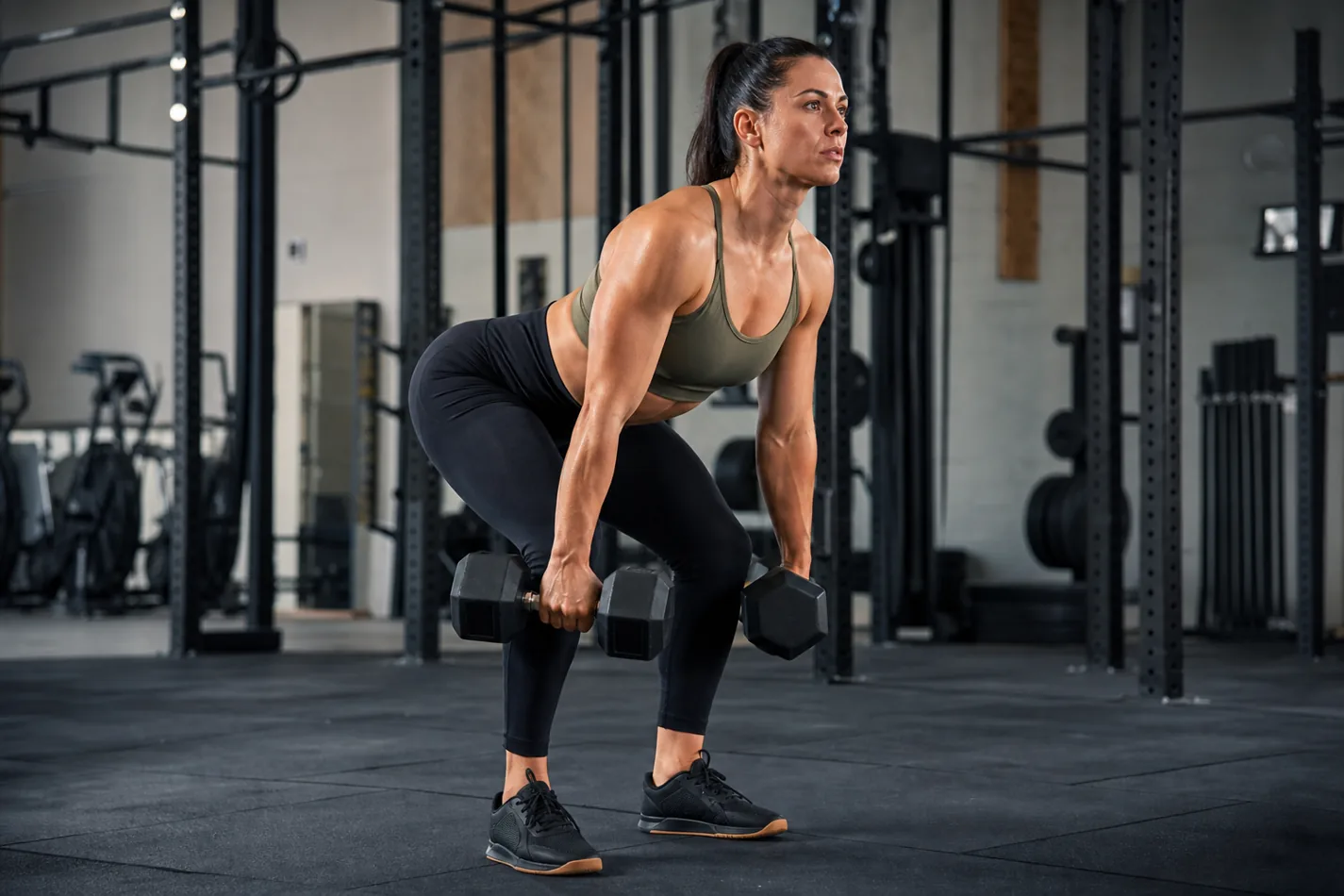
A dumbbell hang clean starts with the bells above the floor, usually around mid-thigh or just above the knees. From there, the athlete hinges, extends hard through the hips and legs, and receives the dumbbells at the shoulders.
That makes it different from the dumbbell deadlift setup, where the goal is a clean pull from the ground. It also connects well to the dumbbell clean and jerk, because a bad clean usually ruins the jerk that follows. If the bells crash into the shoulders or land with the elbows buried, the next movement starts in trouble.
Set the hang before you pull
The hang position should feel loaded, not collapsed. Feet stay flat, hips move back, ribs stay down, and the dumbbells remain close to the thighs. If the bells are already swinging in front of the body, the athlete has to chase them during the clean.
A good setup borrows patience from hang power clean timing. You do not need a huge dip. You need a hinge that lets the hips snap and the legs finish the pull. The dumbbells should travel close enough that the athlete can meet them, not catch up to them.
Pop the hips, then pull under
The common mistake is treating the clean like a curl. The athlete bends the elbows early, lifts the bells with the arms, and wonders why the shoulders burn before the workout is half done. The better sequence is legs first, then arms.
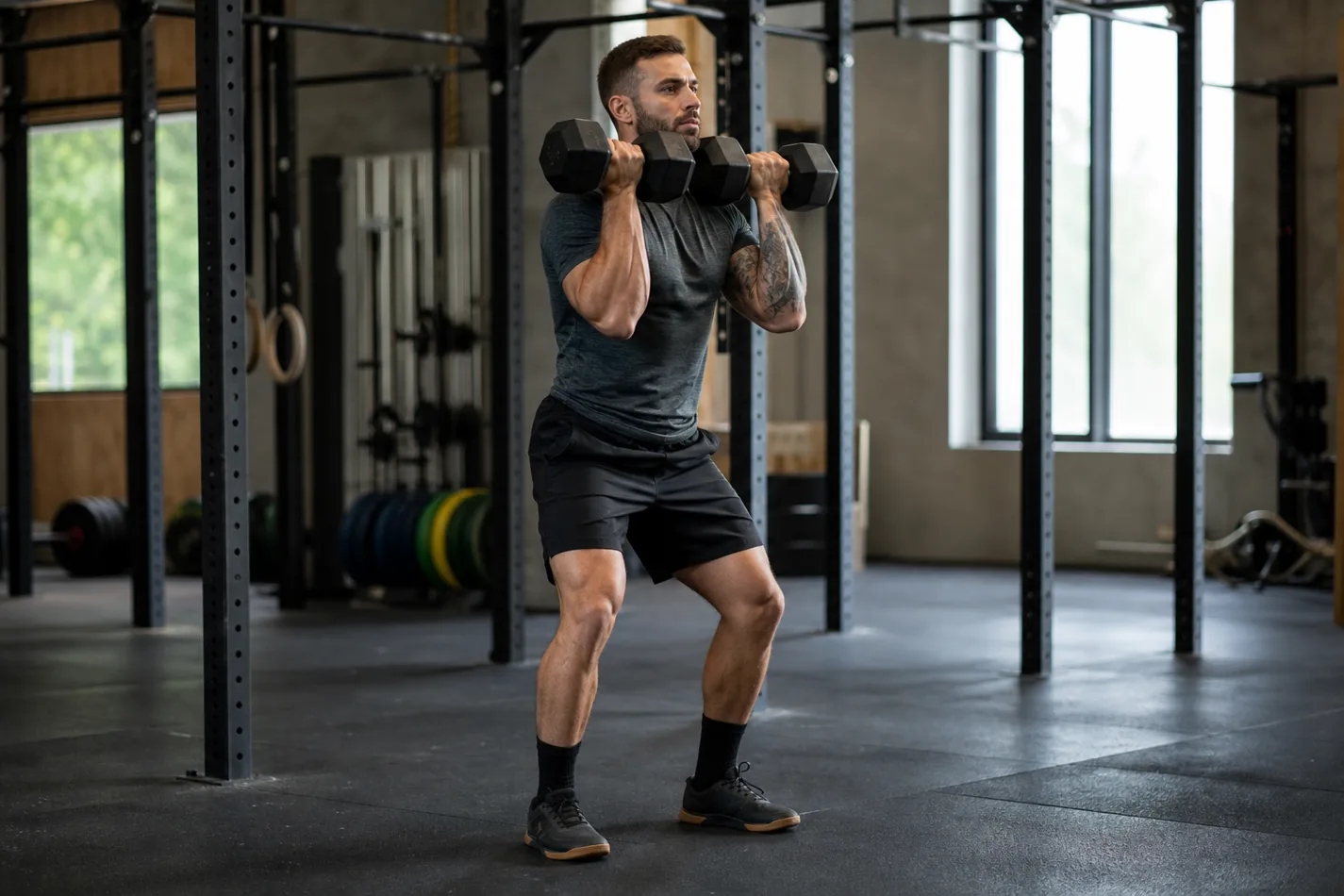
Think of the hip pop as the part that makes the dumbbells light. Once the body finishes tall, the elbows can turn through and the athlete can receive the bells in a usable rack. The rack does not need to look exactly like a barbell front rack position, but the dumbbells should sit securely enough that the athlete is not holding them out in space.
| Fault | What it looks like | Fix it with |
|---|---|---|
| Early arm pull | Elbows bend before the hips finish | Jump tall, then guide the bells to the rack |
| Bells swing forward | The catch lands away from the shoulders | Keep the hang close and brush the thighs lightly |
| Soft catch | The athlete absorbs the bells with a loose trunk | Stand tall, brace, and meet the load with the elbows through |
| No reset | Every rep starts from a different place | Bring the bells back to the same hang before pulling again |
How to pace dumbbell hang cleans in a WOD
Fast singles rarely make sense here unless the load is heavy and the workout rewards short breaks. In most mixed pieces, small unbroken sets are cleaner. The athlete can breathe at the top, lower the bells under control, and keep the next rep close.
Grip matters, but the shoulders usually complain first when the catch gets sloppy. If hang cleans are paired with toes-to-bar, burpees, rowing, or a dumbbell thruster, choose a pace that keeps the rack calm. A set that looks fast for five reps and ugly for the next ten is not really fast.
The demo below is useful because it keeps the movement simple: hinge, jump, then receive the dumbbells without curling them. Watch how little the bells swing away from the body.
Scaling without losing the lesson
Useful CrossFit scaling keeps the same job while lowering the cost. Use lighter dumbbells, reduce the reps, switch to one dumbbell at a time, or practice hang high pulls before catching. If the athlete cannot keep the bells close, lowering the load is better than arguing with the clock.
For beginners, start with a short CrossFit warm-up: dumbbell deadlifts, hang shrugs, high pulls, then light cleans. That order teaches the path before the athlete has to receive the bells. It also gives the coach time to see whether the athlete is jumping or curling.
What to test on the next set
Film five reps from the side. Look for three checks: the dumbbells stay close, the hips finish before the elbows pull, and the catch lands in the same rack every time. If all three are there, add speed or load. If one disappears, make the set smaller and fix that piece first.
The dumbbell hang clean should feel snappy, not random. When the hang is set and the rack is repeatable, the movement stops being a shoulder fight and starts doing what it is meant to do: move power from the floor through the body and into the bells.