The plan
The reverse hyper looks like an accessory machine until someone turns it into a wild leg swing. Then it stops teaching the posterior chain and starts feeding momentum.
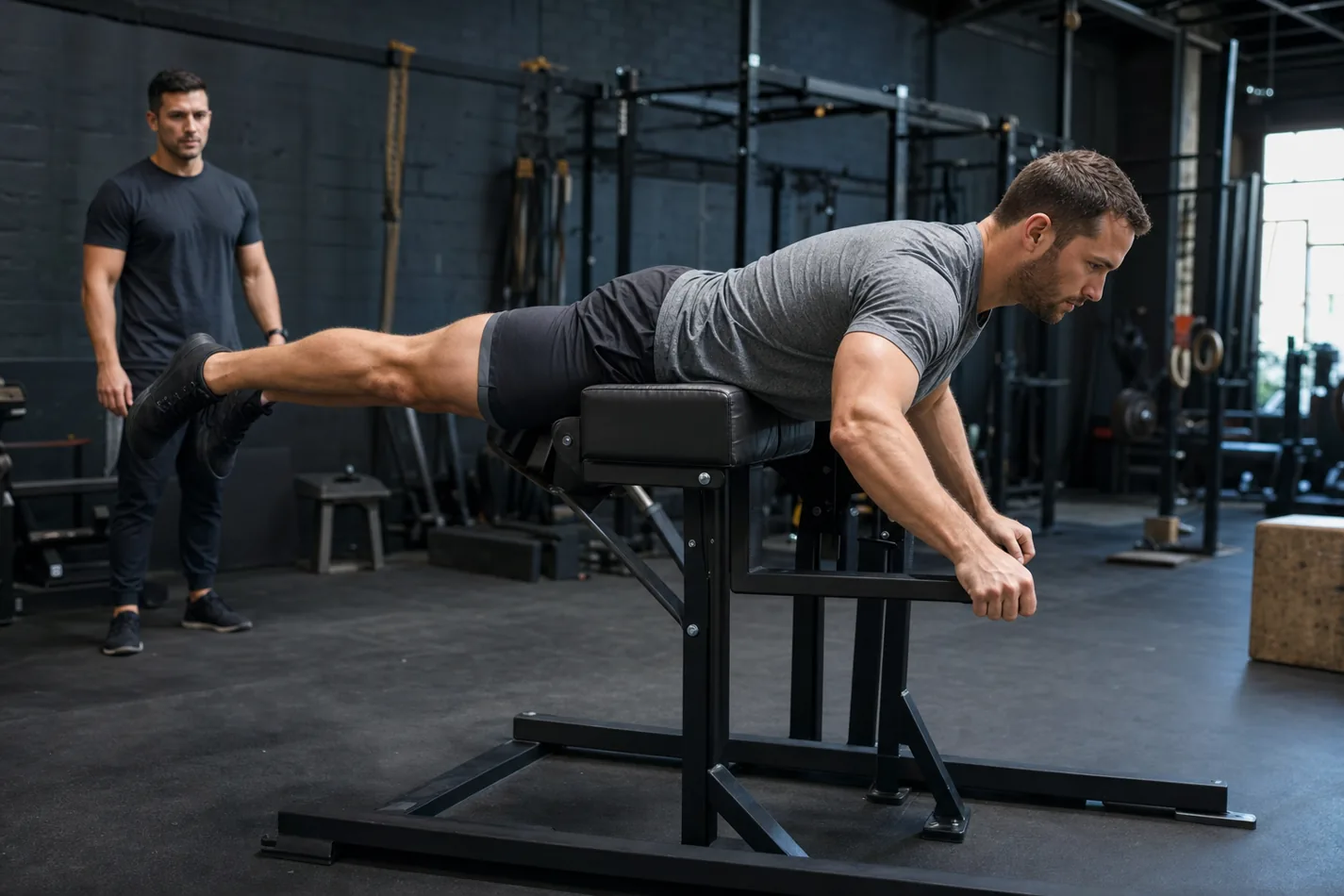
Used well, the reverse hyper can help CrossFit athletes feel hip extension without loading a barbell in the hands. The trick is simple and easy to miss: set the hips on the pad, keep the trunk calm, and move the legs with control instead of chasing height.
- The pad should support the hips while still letting the legs move freely behind the body.
- Good reps feel controlled through the glutes and hamstrings. Bad reps feel like a swing.
- Use it as accessory work, warm-up prep, or a lower-back-friendly hinge drill. Do not race it.
What the reverse hyper is supposed to do
A reverse hyper trains hip extension from a supported position. The torso stays on the pad while the legs move behind the body. That makes it different from a back extension, where the upper body moves around the hips.
For CrossFit athletes, the value is usually not max loading. It is getting the glutes and hamstrings to finish the hip without turning every hinge into a low back tug. That is why it pairs well with the GHD hip extension, the good morning, and light hinge prep before pulling days.
Set your hips before the first rep
Setup decides whether the machine helps or just lets you swing. Lie face down with the hip crease near the edge of the pad. Grip the handles, brace lightly, and let the legs hang under control before starting the first rep.
If the pad is too far up the stomach, the athlete often loses the hip crease and starts moving through the back. If the pad is too low, the body may slide and the rep turns messy. The goal is a stable torso with enough space for the legs to travel.
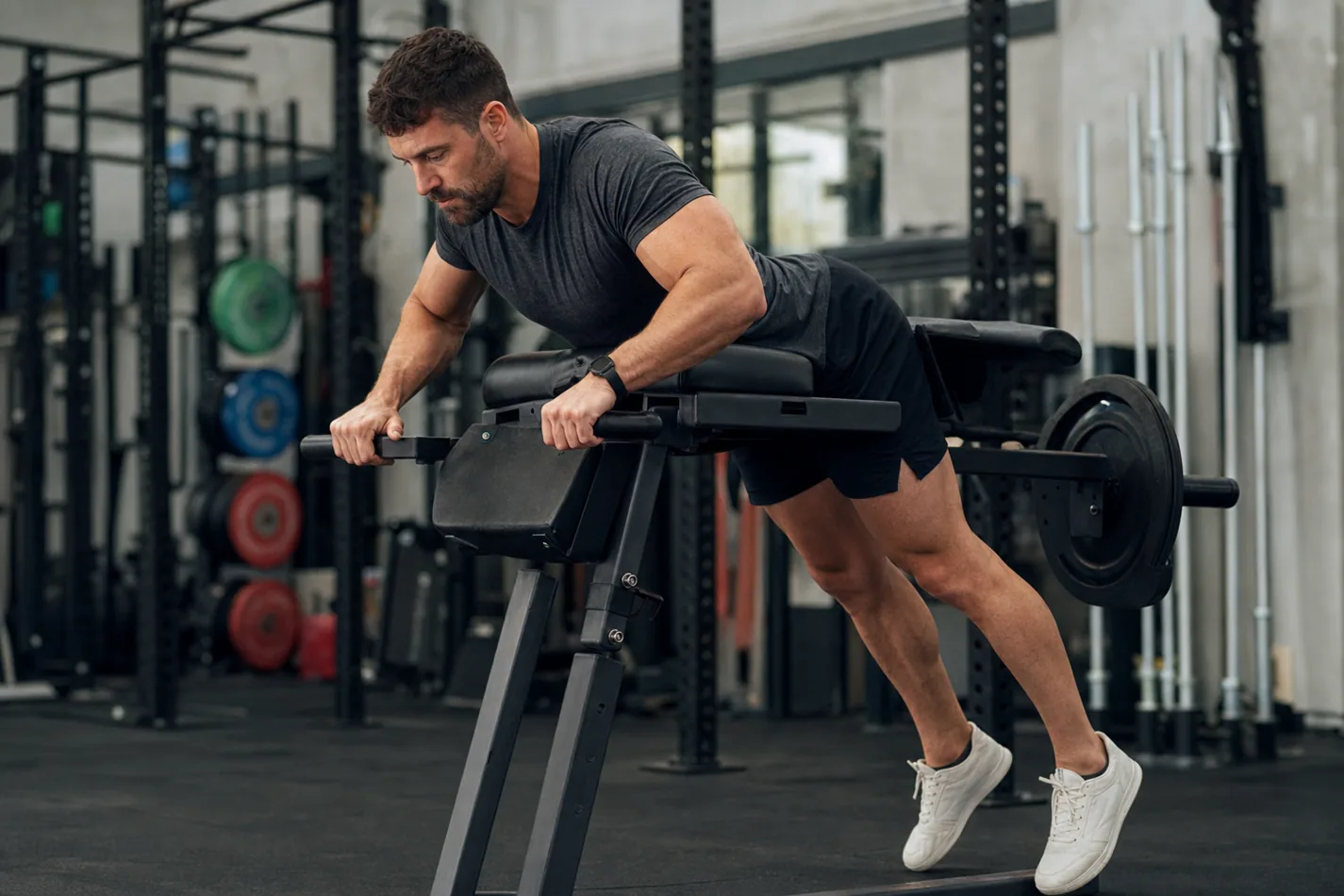
Control beats height
The common mistake is trying to kick the legs as high as possible. More height does not always mean better work. If the feet fly up and the low back arches hard at the top, the athlete probably used momentum instead of finishing with the hips.
A better rep is quieter. Lift until the body reaches a strong line, squeeze briefly, then lower with control. The same discipline shows up in the Romanian deadlift and kettlebell swing. The hips drive the movement, but the spine should not be the part doing the most work.
| Fault | What you see | Better cue |
|---|---|---|
| Swinging the legs | The first rep looks slow, then every rep gets bigger from momentum | Pause at the bottom and restart each rep |
| Over-arching at the top | The ribs flare and the low back finishes the rep | Stop at a straight body line |
| Loose setup | The athlete slides on the pad or grips harder every rep | Reset the hip crease and handles before adding load |
| Too much volume | The hamstrings cramp or technique changes halfway through | Use smaller sets and slower reps |
Where it fits in CrossFit training
The reverse hyper is usually best outside the clock. Use it before a pulling session as posterior chain prep, after strength work as accessory volume, or on recovery days when you want blood flow without another heavy barbell hinge.
It can also help athletes who struggle to feel their hips in the deadlift setup. Strip away the bar, grip, and floor start, and the athlete gets a cleaner signal. If the reverse hyper still turns into a back extension, the issue is not the barbell. It is position and control.
The demo below is useful because it shows the reverse hyper as a controlled hip movement, not a loose kick. Watch the pad position and the tempo before you copy the range of motion.
Programming without making it weird
Start with bodyweight or very light loading. Two or three sets of 10 to 15 controlled reps are enough for most athletes. If the gym uses a reverse hyper with a strap, keep the swing short at first and make each rep match the one before it.
In a class, the reverse hyper works well after a short CrossFit warm-up. It should not slow the room down or turn into a circus station. Give athletes one or two clear cues, then keep the sets short enough that the last rep still looks coached.
Scaling options when the machine is not available
Not every CrossFit gym has a reverse hyper. That is fine. The pattern can be trained with hip extensions on a GHD, light good mornings, banded pull-throughs, slow kettlebell hinges, or unloaded RDL practice. The best CrossFit scaling choice is the one that makes the athlete feel the hips without forcing the back to fake the rep.
If you do have the machine, film one set from the side. Look for three things: quiet torso, smooth leg path, and a top position that stops before the back takes over. If those are there, add volume slowly. If they are not, lower the load and make the rep smaller.