The plan
Candlestick rolls look playful until the athlete has to stand up clean. Then the drill exposes a lot at once: core control, hip speed, balance, and whether the feet land close enough to do anything useful.
In CrossFit, the candlestick roll is not just a floor trick. It teaches athletes to stay tight while rolling through the back, bring the feet under the body, and finish with a controlled stand instead of a scramble. That makes it a smart drill for warm-ups, bodyweight skill work, pistol squat prep, and workouts where getting off the floor quickly matters.
- Keep the tuck tight as the hips roll up, or the movement gets slow before the feet land.
- Plant the feet close to the hips before standing. A long landing turns the finish into a fight.
- Scale the stand-up before adding speed, load, or a pistol-style finish.
What a clean candlestick roll should look like
Start seated or lying on the mat, depending on the version your coach wants. Roll back onto the upper back, not the neck. The hips rise, the knees stay close, and the athlete uses the arms for balance without flinging them wildly overhead.
The key moment happens as the body rolls forward again. The feet need to come down close to the hips. If they land too far away, the athlete has to chase the stand-up with the chest and arms. A good rep feels compact. The roll feeds the stand instead of stopping on the floor.
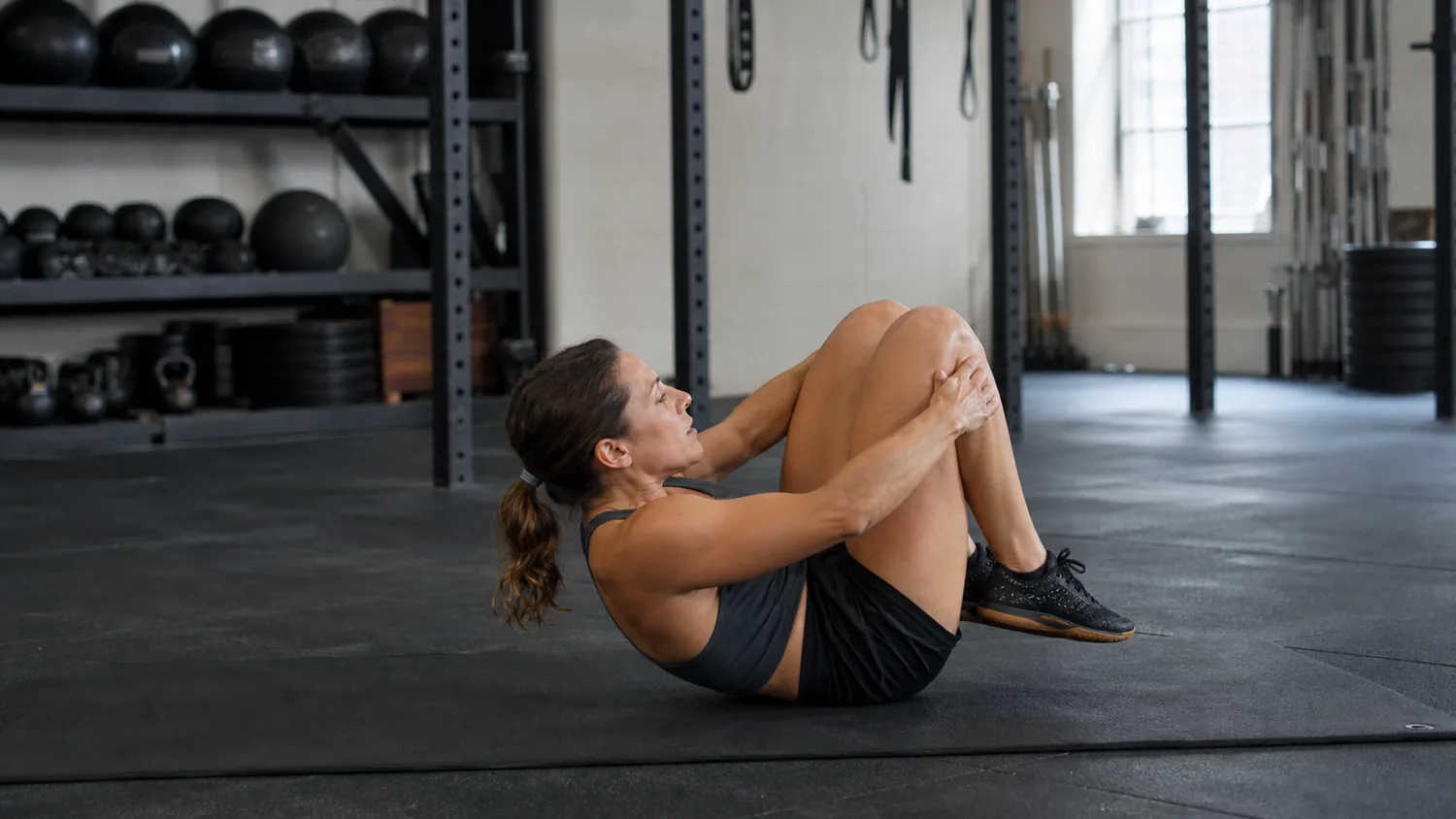
The tuck controls the whole rep
Most missed candlestick rolls start with a loose tuck. The legs drift away, the hips move slowly, and the athlete lands with the feet too far forward. From there, even strong athletes can look stuck.
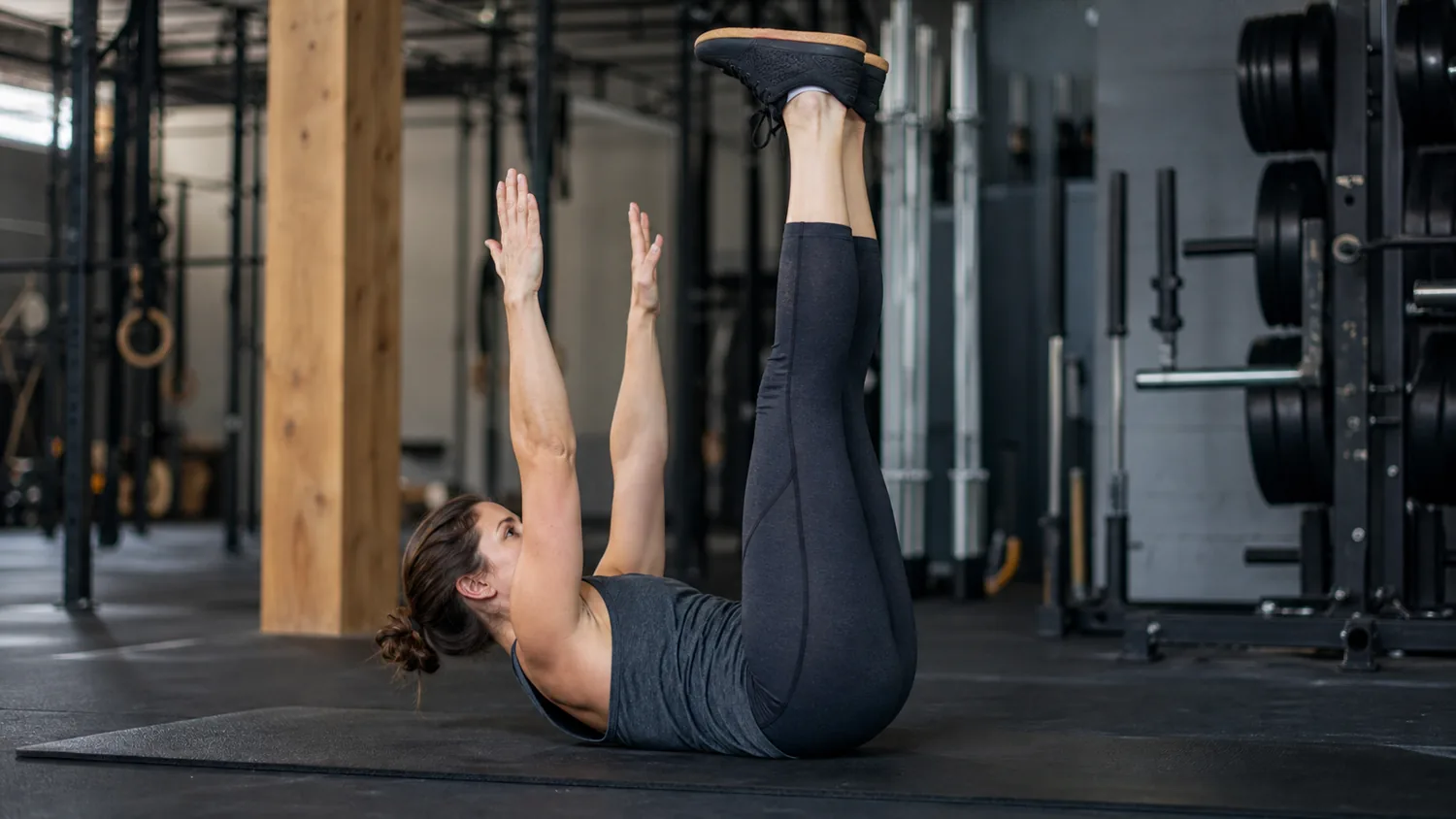
Think small first. Pull the knees in, round through the upper back, and keep the roll smooth. The midline lesson is close to hollow hold work: the athlete has to control the ribs and pelvis before trying to make the movement bigger. Loose shape makes the next piece harder.
| Fault | What you see | Fix |
|---|---|---|
| Rolling onto the neck | The head gets trapped under the body | Roll to the upper back and keep the chin lightly tucked |
| Feet land too far away | The athlete rocks up but cannot stand | Pull the heels closer before driving up |
| Loose legs | The roll slows down and spreads out | Keep the knees tight and move as one shape |
| Panic stand-up | The arms swing hard and the chest collapses | Slow the roll, plant both feet, then stand tall |
Why CrossFit athletes use it
Candlestick rolls build the habit of moving from the floor to the feet without losing shape. That shows up more often than people think: burpees, wall walks, gymnastics transitions, warm-up games, and bodyweight conditioning all reward athletes who can move cleanly through the ground.
The drill also gives coaches a safer checkpoint before harder single-leg work. If an athlete wants better pistol squat control, the candlestick roll can show whether they can keep the torso organized, place the foot under the body, and finish without collapsing inward.
The demo below is useful because it shows the roll as one connected shape. Watch the tuck first, then the feet. If the feet land too far away, the stand-up usually turns into a sit-up with hope attached.
How to scale candlestick rolls
Start with the roll only. Roll back, bring the knees in, roll forward, and stop in a seated position. Once that is smooth, add a foot plant without standing. Then stand with both feet. The athlete should earn each layer instead of throwing speed at the problem.
Use a light plate, band, or partner only if it helps the athlete feel the timing. Do not turn the scale into a rescue mission. Good CrossFit scaling keeps the point of the drill intact: a tight roll, a close foot plant, and a stand-up the athlete can repeat.
Where it fits in a WOD or warm-up
Candlestick rolls work best before gymnastics, bodyweight conditioning, or workouts with frequent transitions to the floor. Keep the early sets low pressure. Five to eight smooth reps can teach more than twenty rushed ones.
They also pair well with AbMat sit-ups and V-ups when the goal is trunk flexion and body control, but the intent is different. A sit-up finishes seated. A candlestick roll has to carry momentum into a solid foot plant.
How to use candlestick rolls in training
Practice them when you want better floor-to-feet movement, pistol prep, or a warm-up that makes athletes coordinate more than one joint at a time. Start with slow reps and film from the side if the stand-up keeps failing. The answer is usually visible: feet too far away, tuck too loose, or the roll going into the neck.
If the athlete can roll, plant, and stand without a wild arm swing, then speed can come later. Until then, keep the drill boring on purpose. Tight roll, close feet, quiet stand.