The plan
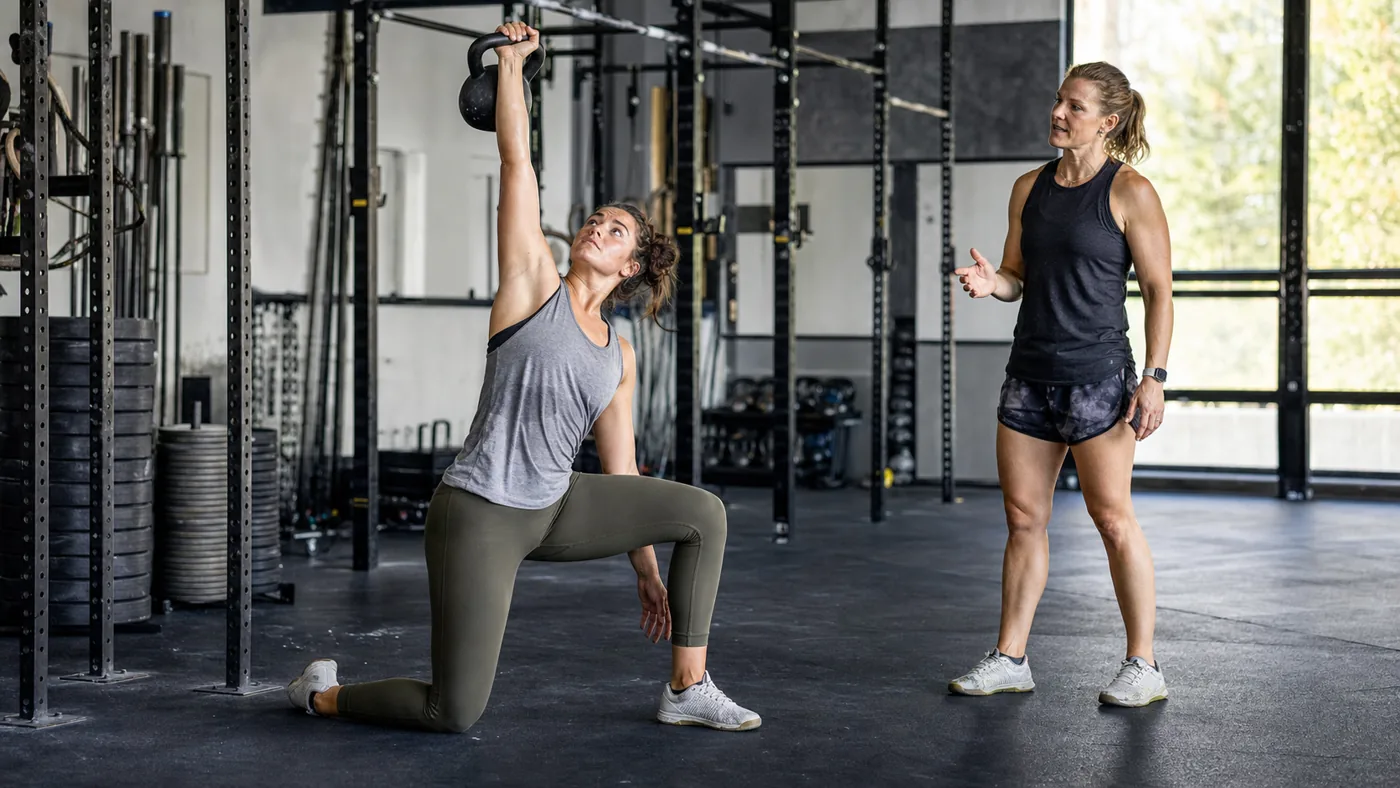
The Turkish get-up is not a movement you can bully through for long. Rush the first sit-up, lose the shoulder, stand from a wobbly lunge, and the kettlebell starts making every bad position louder.
In CrossFit, it usually appears as skill work, accessory strength, warm-up prep, or a slower piece inside a mixed workout. It teaches something a lot of faster movements hide: can you keep a load stacked overhead while the body changes shape underneath it?
- A good Turkish get-up is built around a locked-out shoulder and patient transitions.
- The rep should feel like several small positions, not one long scramble from the floor to standing.
- Scale the load or range when the wrist bends, the elbow softens, or the lunge turns unstable.
What the Turkish get-up trains
The Turkish get-up trains shoulder stability, trunk control, hip mobility, single-leg strength, and patience under load. That sounds like a lot because the movement asks the athlete to solve several problems in one rep.
It also exposes the overhead position without letting speed cover it up. If an athlete struggles to keep the ribs down and the arm stacked in an overhead squat position, the get-up often shows the same leak at a slower pace.
Start on the floor before you think about standing
Begin on your back with the weight pressed straight up. The loaded-side knee is bent, the same-side foot is planted, and the free arm is angled out on the floor. Before moving, check the wrist, elbow, shoulder, ribs, and eyes. The arm should stay vertical, not drifting toward the ear or falling across the body.
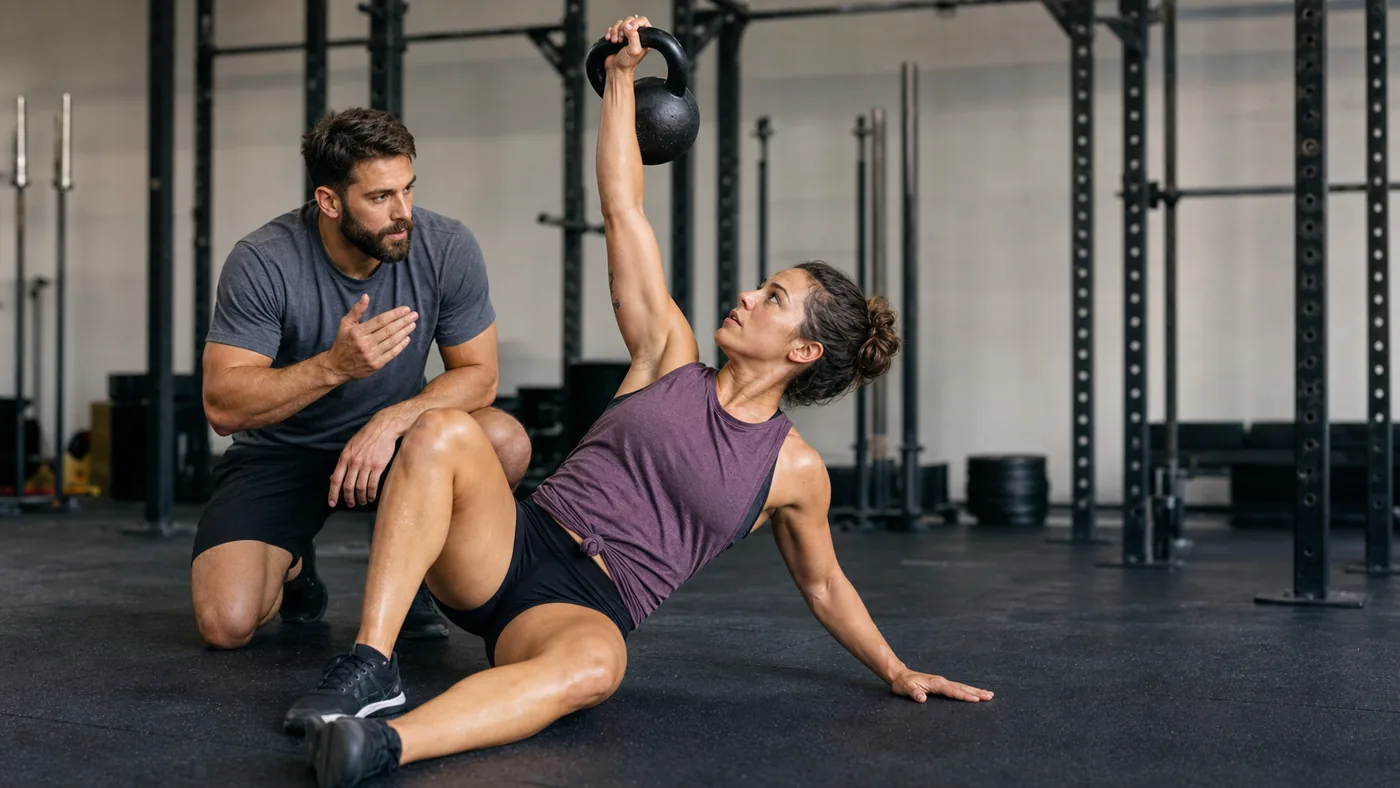
The first move is a roll to the elbow, then a post to the hand. This is where many reps go wrong. Athletes try to sit straight up, lose the stack, and turn the kettlebell into a balance test. Roll slightly toward the free elbow, keep the loaded shoulder packed, and let the eyes stay on the bell until the torso is stable.
| Position | What should happen | Common miss |
|---|---|---|
| Floor press | Wrist straight, elbow locked, shoulder active | Bell tilted back with a bent wrist |
| Elbow and hand post | Torso rolls up while the arm stays vertical | Sitting straight up and losing the stack |
| High bridge | Hips lift enough to sweep the leg through | Dragging the knee under a low hip |
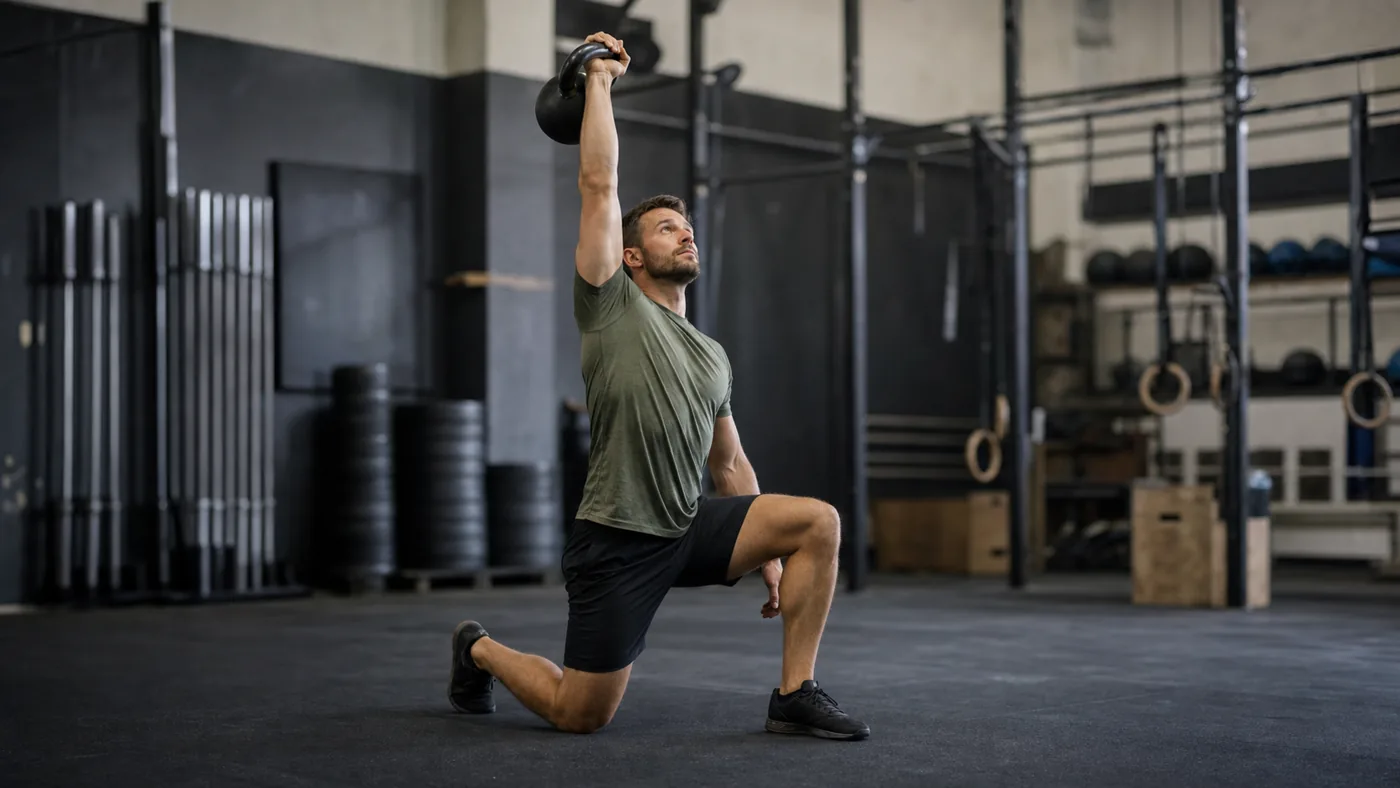
| Half kneeling | Front foot planted, back knee under the hip, ribs down | Standing from a twisted lunge |
| Finish | Stand tall, pause, then reverse with control | Dropping quickly after the top position |
Use the video to study the transitions
This CrossFit demo is useful because it shows the get-up as a chain of positions. Watch the bell first, then the feet. The best reps look almost quiet: press, roll, post, bridge, sweep, lunge, stand, then return the same way.
How heavy should you go?
Use a load that lets you pause in every position. If you cannot stop on the elbow, hand, half-kneeling position, and top position, the weight is probably ahead of your control. The Turkish get-up is not a max lift in most CrossFit settings. It is usually better when the athlete owns the rep instead of surviving it.
For athletes who want better overhead strength, the get-up pairs well with slower pressing work. A stronger CrossFit strict press helps, but the get-up asks a different question: can you keep that shoulder organized while the hips and legs keep moving?
Mistakes that make the get-up feel sketchy
The mistake most people notice first is the shaky arm. The bigger problem is often lower down. A rushed roll, lazy bridge, or poor lunge forces the shoulder to save the rep. Once the bell is no longer stacked over the base, every inch feels heavier.
- Letting the wrist bend backward under the handle.
- Looking away from the bell too early during the floor portion.
- Sweeping the leg through without lifting the hips enough.
- Standing from a narrow or twisted half-kneeling position.
- Dropping back to the floor faster than you stood up.
When to scale or swap the movement
Scale the Turkish get-up when the athlete cannot keep the elbow locked, when the shoulder feels pinchy, or when the lunge position is too unstable to control. Good options include a shoe get-up, a light dumbbell get-up, a half get-up to the hand, or slow overhead holds from the floor.
If the workout is meant to challenge hinge power and conditioning, a movement like the CrossFit kettlebell swing may fit the intent better. If the goal is controlled strength, stay with the get-up and reduce the load. That is the same logic behind smart CrossFit scaling: keep the training purpose alive instead of chasing a version that makes the rep worse.


