The plan
- Why thrusters feel so much harder than they look
- Set the front rack before you worry about speed
- The timing mistake that burns out your shoulders
- How to breathe without losing the rep
- Video cue to watch before your next set
- A simple way to practice thrusters without wrecking yourself
- What to check before your next WOD
A thruster exposes everything at once. If your front rack is loose, the squat feels heavier. If your timing is late, the press turns into a grind. If your breathing disappears, the bar starts winning by round two.
That is why thrusters in CrossFit are not just a squat plus a press. The good reps feel like one connected drive from the floor through the bar. The bad ones feel like five separate problems stacked on top of tired legs.
- A cleaner thruster starts with a real front rack, not a bar floating in your hands.
- The press should ride the leg drive. If you press too early, your shoulders pay for it.
- Break the set before your breathing and rack position collapse. That saves more time than heroic no-reps.
Why thrusters feel so much harder than they look
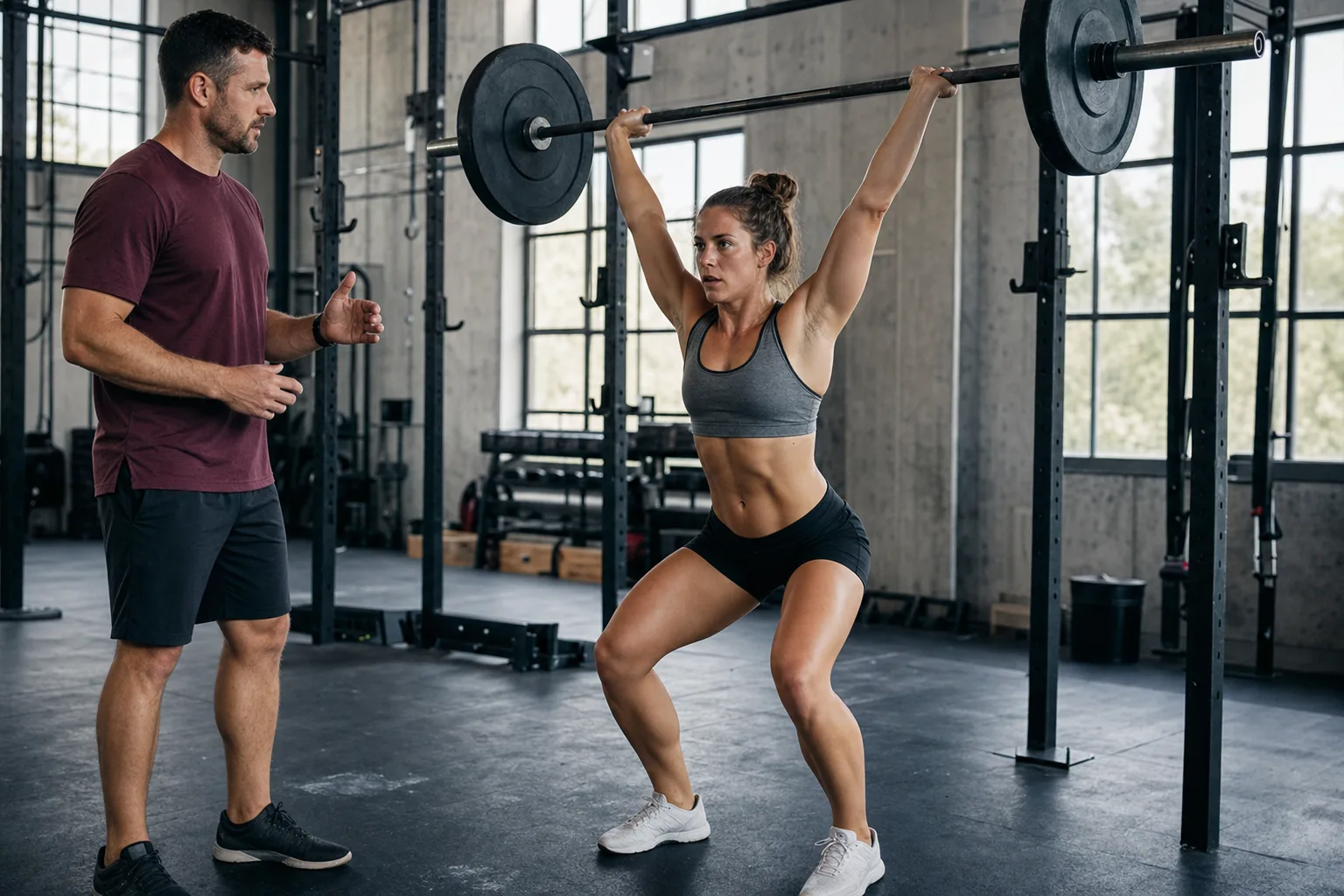
The thruster is simple on paper: front squat, stand, finish overhead. In a workout, it asks for leg strength, shoulder stamina, midline control, wrist comfort, and enough patience to breathe while the clock is yelling at you.
Most athletes lose the movement in one of two places. Some collapse in the bottom of the squat and have to rebuild the rep from a bad position. Others stand up fine, then pause and strict press the bar because they missed the window where the hips could help.
The goal is not to make thrusters comfortable. They are never that generous. The goal is to make each rep predictable enough that your breathing and pacing stay under control. The same breathing problem shows up in wall balls, where athletes rush the throw before they have finished standing tall.
Set the front rack before you worry about speed
A weak front rack turns every thruster into a shoulder exercise. The bar should sit on the shoulders, with the hands guiding it. If you hold the whole load in your wrists and fingers, the press will feel heavy before your legs have done any work.
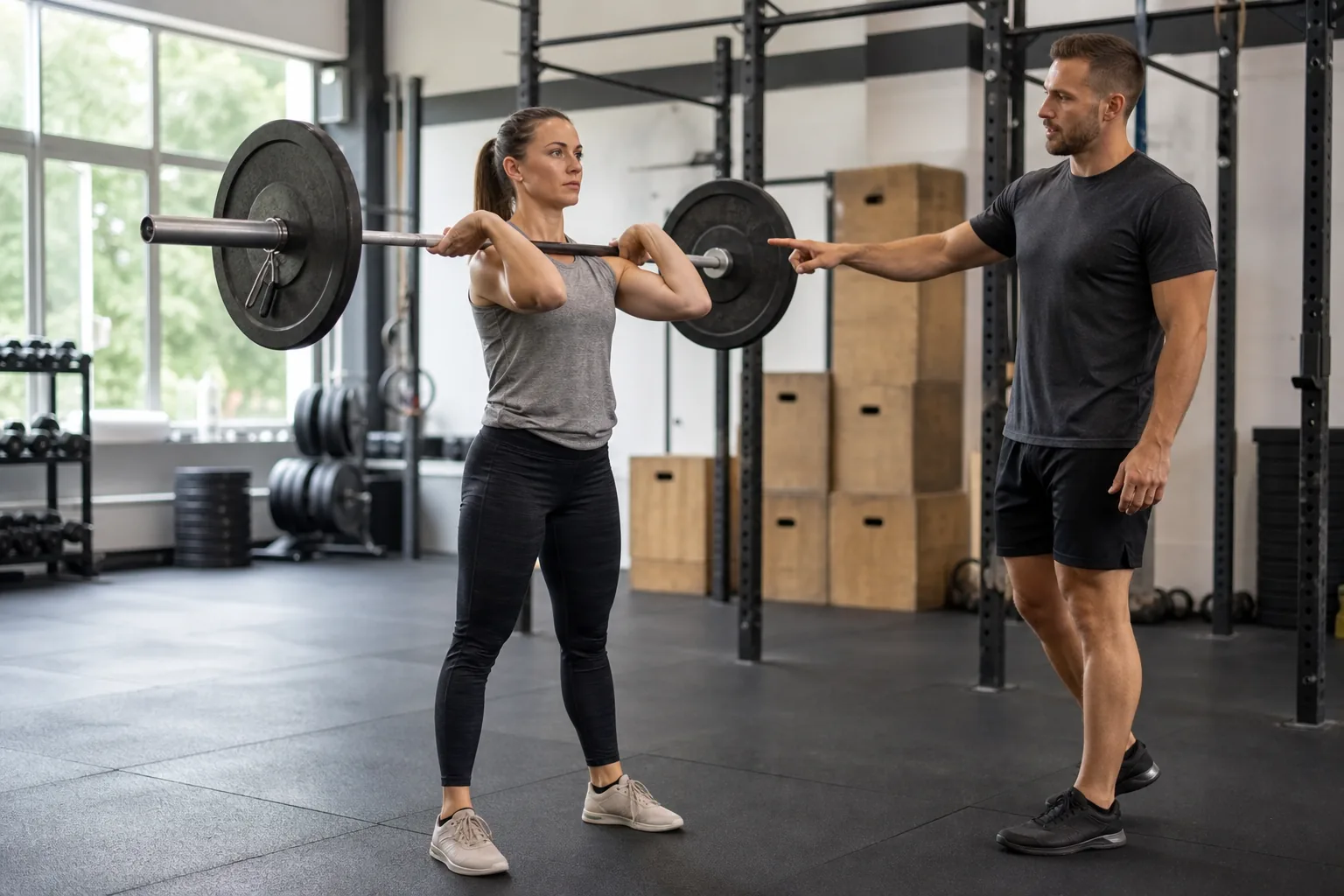
Before the workout starts, check three things. Can you keep the elbows high enough that the bar is not sliding forward? Can you squat without the chest falling? Can you keep a full hand or at least a controlled fingertip grip on the bar without pain?
If the answer is no, adjust before loading up. You may need a slightly wider grip, better wrist warm-up, or a lighter bar. For some athletes, dumbbell thrusters are the better scale because they reduce wrist stress while keeping the conditioning effect.
The timing mistake that burns out your shoulders
The press should not start as soon as you leave the bottom. Drive through the legs first, then punch overhead as the bar gets light. Think of the rep as a vertical wave: squat, stand hard, finish with the arms. If the arms start the fight too early, the legs never get to help.
A useful cue is "wait, then punch." Wait until the hips and knees are nearly extended. Then punch the bar overhead without letting the ribs flare. This keeps the rep from turning into a front squat followed by a tired push press.
| What you feel | Likely cause | Fix for the next set |
|---|---|---|
| Shoulders fail before legs | You are pressing too early | Stand harder before the punch overhead |
| Bar drifts forward | Chest drops or elbows fall in the squat | Slow the descent and keep elbows proud |
| Low back tightens | Ribs flare during the lockout | Squeeze the abs and finish with the bar stacked |
| Breathing disappears | Sets are too big for the workout pace | Break earlier and restart with one clean breath |
How to breathe without losing the rep
Breathing on thrusters is awkward because the movement compresses you at the bottom and demands a strong brace on the way up. Holding your breath for a few heavy reps can work in strength training. In a CrossFit workout, it usually turns into panic.
Try this pattern during moderate sets: inhale as the bar returns to the shoulders, brace through the dip into the squat, exhale as you drive and lock out. It does not need to be theatrical. It just needs to happen before your heart rate makes the decision for you.
When fatigue hits, do not stare at the bar on the floor for 20 seconds and call it strategy. Put the bar down before the ugly rep, take two controlled breaths, then pick it up with a real front rack. Small planned breaks beat dramatic collapses. If the workout asks for speed but your bar path is breaking down, use this CrossFit scaling guide to keep the stimulus without turning the set into ugly singles.
Video cue to watch before your next set
This CrossFit demo is worth watching because it shows the movement as one connected rep. Pay attention to the bar path and the moment the legs hand the work to the arms.
A simple way to practice thrusters without wrecking yourself
Use light to moderate loading and keep the sets short enough that every rep looks the same. Five sets of six clean reps teach more than one set of 30 where the last 12 reps are a negotiation with gravity.
- Start with an empty bar and pause in the front rack for two seconds.
- Add a controlled front squat, then stand without pressing.
- Use the leg drive to finish one smooth thruster.
- Build to small sets of three to six reps.
- Stop the set when the bar path drifts or the elbows disappear.
For practice days, an EMOM CrossFit format works well because it gives you short windows to repeat clean reps before fatigue takes over.
What to check before your next WOD
Pick one limit to fix first. If the rack is the problem, clean up the setup before chasing bigger sets. If the timing is the problem, use lighter reps until the leg drive and press feel connected. If pacing is the problem, decide your breaks before the workout starts.
Thrusters punish wishful thinking fast. The athletes who move best are not always the ones with the strongest shoulders. They are usually the ones who keep the rack, breathe early, and let the legs do their share before the arms finish the job.


