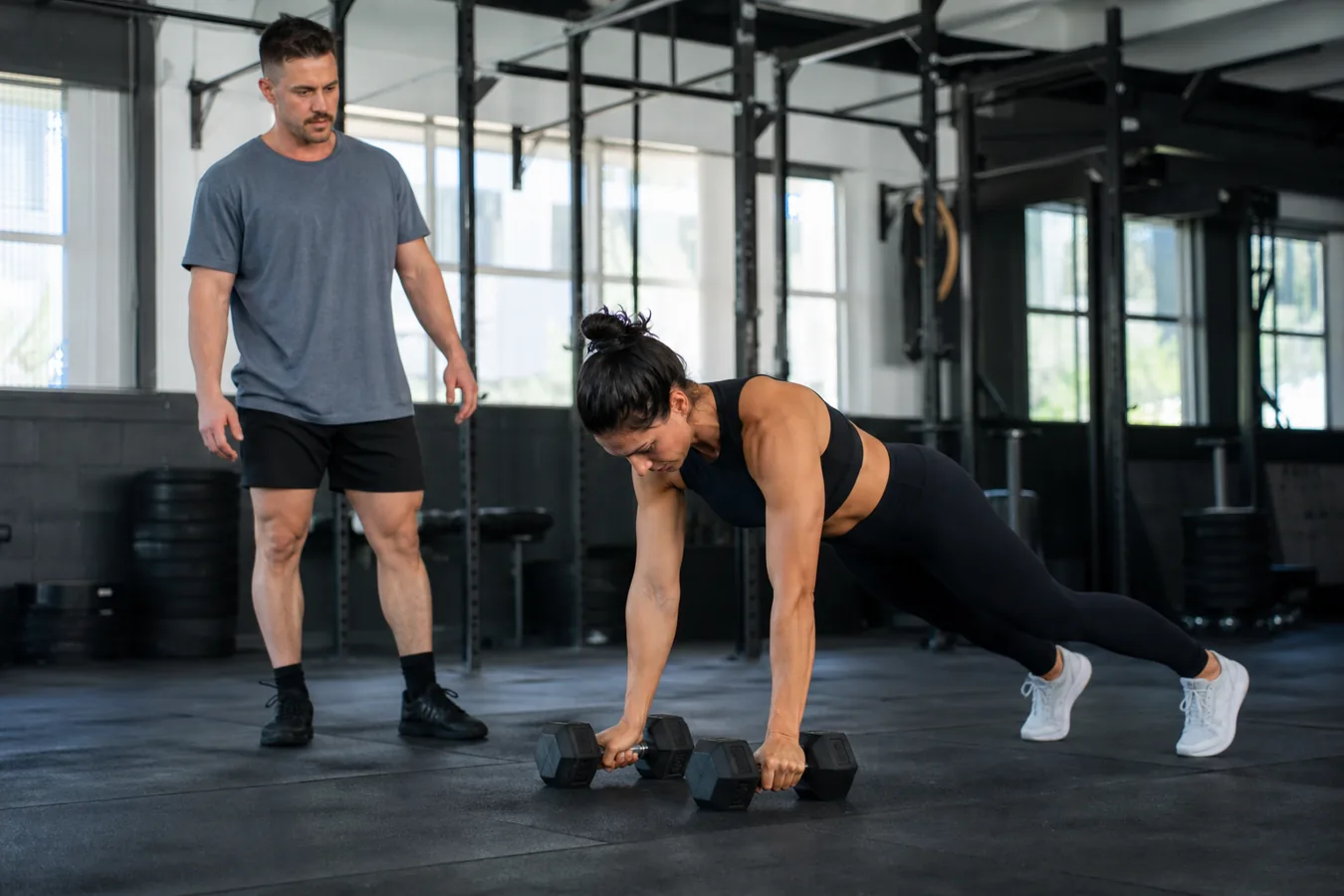
The plan
The devil press is one of those CrossFit movements that punishes panic. It starts like a dumbbell burpee, turns into a violent hip extension, then asks for a clean overhead finish while your breathing is already messy.
That is why the movement is rarely won by the athlete who muscled the first ten reps. The better plan is to link the floor, the hinge, and the overhead position so each rep costs a little less.
- A devil press is not a strict dumbbell snatch after a burpee. The hips should drive the dumbbells overhead.
- Keep the feet wide enough to breathe and hinge, but not so wide that every rep becomes a slow reset.
- Scale the weight or range if the back rounds, the dumbbells drift away, or the overhead finish turns soft.
What a devil press should feel like
A good devil press feels like a connected chain. Hands stay on the dumbbells, feet jump forward, hips load, then the athlete drives the bells overhead in one smooth pull. There is some arm action at the top, but the arms should not be doing the whole job.
If the movement feels like a burpee, a dead stop, and then two ugly curls, the timing is off. Athletes who already understand how to keep the bells close during a dumbbell snatch in CrossFit usually learn the devil press faster because the same close-path idea shows up here.

Set up the dumbbells before the clock starts
Place the dumbbells under the shoulders with enough space for the chest to reach the floor between them. The handles should feel stable. If the bells roll or sit too narrow, the burpee phase gets awkward and the pull starts from a bad position.
On the jump forward, land with the feet outside the dumbbells. This gives the hips room to load. A narrow stance often forces the athlete to round, shrug early, or turn the rep into a slow squat clean. A stance that is too wide can work for some athletes, but it usually makes cycling slower.
The goal is not a perfect textbook hinge every time. It is a repeatable position you can find when tired. That is the same practical filter behind smart CrossFit scaling choices: protect the stimulus, then decide how much load and speed you can handle.
Common faults and fixes
| Fault | What it looks like | Fix to try |
|---|---|---|
| Pulling with the arms too early | The dumbbells creep up before the hips finish | Delay the arm bend and think about jumping the bells upward |
| Letting the bells swing away | The dumbbells drift forward and crash overhead | Keep the handles close after the floor and finish stacked |
| Landing too narrow | The athlete cannot hinge or breathe between reps | Jump the feet outside the dumbbells and reset the hips |
| Soft overhead lockout | The ribs flare and the bells finish in front of the body | Squeeze the glutes, brace, and finish with biceps near the ears |
Watch the rhythm before you add weight
This Mayhem Athlete video is useful because it shows the devil press as a rhythm problem, not just a toughness test. Watch how the dumbbells stay connected to the body and how the hips start the hard part of the rep.
How to pace devil presses in a WOD
The first mistake is sprinting the burpees and then staring at the dumbbells. A better rhythm is steady from the start: hands down, chest to floor, feet forward, hips through, lock out, breathe. Fast athletes make that loop look boring.
If the workout includes box jumps, wall balls, or running, be careful with how much leg fatigue you create early. Devil presses can sneak up because they do not feel heavy on rep one. They feel heavy when the hinge slows down and every lockout takes a second longer.
The breathing lesson is similar to burpee box jump over technique: smooth transitions usually beat dramatic surges. If you can keep the same rep shape for the whole set, the score takes care of itself.
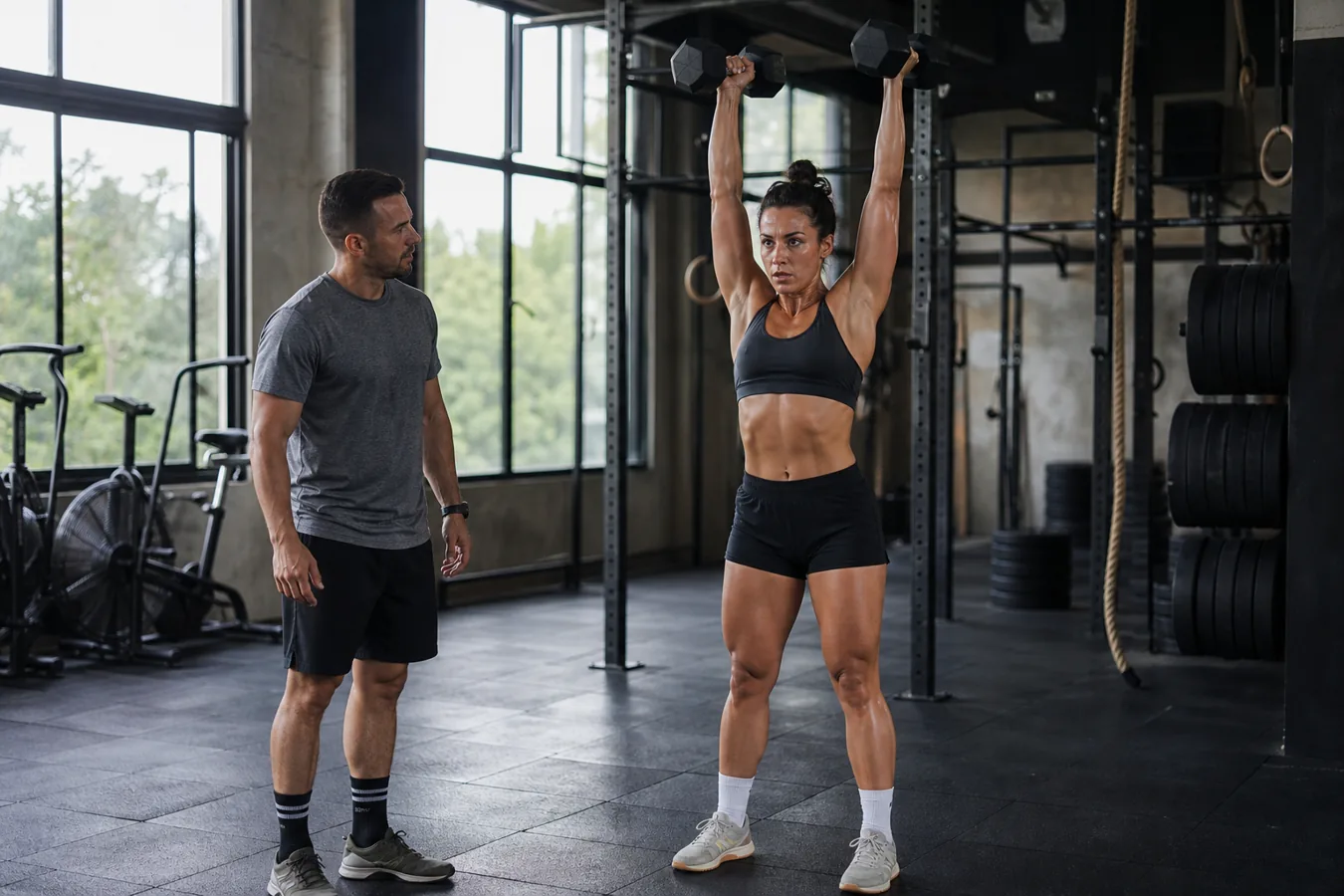
When to scale the movement
Scale the devil press when the dumbbells pull the athlete out of position, not only when the weight feels heavy. A lighter pair of dumbbells can preserve the same conditioning hit while keeping the back, shoulders, and lockout cleaner.
Useful options include lighter dumbbells, single dumbbell devil presses, burpees to a plate, or a dumbbell deadlift plus hang power snatch if the goal is to train the pull without the full burpee demand. Newer athletes can also separate the pieces: burpee step-up, hinge drill, then overhead finish.
What to check in your next workout
- Do the dumbbells stay close after the feet jump forward?
- Are you driving with the hips before the arms pull?
- Can you lock out overhead without leaning back?
- Does your rep look the same at the end of the set?
- Can you breathe before the next burpee instead of rushing into a bad position?
If those checks fall apart, take weight off before you take effort off. The devil press should be hard, but it should not turn into a wrestling match with two dumbbells on every rep.


