The plan
You finish a CrossFit workout and want to add aerobic work, or you head out for an easy run only to find your breathing climbing and your pace slipping. Zone 2 is meant to be controlled rather than dramatic: you keep moving at an effort you can sustain, using breathing, perceived effort, and, if useful, heart rate to check yourself. The tricky part is that “Zone 2” is not one universal heart-rate range. Here’s how to tell what the label means, choose a practical activity, and see whether your effort stays steady.
What does Zone 2 cardio feel like?
Zone 2 cardio is steady aerobic exercise: you’re working, but not pushing toward an all-out effort. In plain language, you should be able to keep moving and speak in full, short sentences, even if you would rather not deliver a speech. The CDC’s talk test describes moderate-intensity activity as an effort where you can talk but not sing; during vigorous activity, you can manage only a few words before pausing for breath. That makes conversation a useful check, not a laboratory test or a precise definition of Zone 2.
The effort is relative. The CDC notes that a pace that feels vigorous to someone with average fitness may be moderate for a very fit person. Its 0-to-10 effort scale places relative moderate activity at 5 or 6 and vigorous activity at 7 or 8. Zone 2 training is often intentionally kept controlled and sustainable, so do not force your effort to match a number if your breathing, fatigue, or form says otherwise.
This kind of session is different from a hard metcon. You should not need repeated surges, sprint finishes, or long recoveries just to keep going. For American CrossFit athletes, it can be a separate aerobic session on a bike, rower, ski erg, or easy run. Learn how this fits alongside cardio and strength training rather than treating one mode as a substitute for every other training quality.
Why do Zone 2 heart-rate numbers disagree?
“Zone 2” sounds like a fixed physiological category, but consumer watches, coaches, and training systems divide intensity into zones in different ways. The CrossFit coaching article Ask a Coach: Why Don’t We Ever Do Zone 2 Work in CrossFit Classes? describes a five-zone framework in which Zone 1 is about 55–65% of projected or calculated maximum heart rate, Zone 2 is about 65–75%, and Zone 5 begins at 90% or more. Those percentages explain that article’s framework; they are not a universal standard.
A different organization may use “moderate” and “vigorous” categories rather than a five-zone training model. The American Heart Association’s target-heart-rate chart gives moderate activity as about 50–70% of maximum heart rate and vigorous activity as about 70–85%. It also presents 220 minus your age as an estimate of maximum heart rate and says its age-based figures are averages for general guidance. Those broad intensity bands overlap the CrossFit article’s Zone 2 range, but they do not establish that the labels mean the same thing.
That difference matters when you enter your age into a watch and expect a precise personal threshold. A percentage of estimated maximum heart rate is a rough guide, not a direct measurement of your individual training zones. Resting heart rate, fitness, medications, and other factors can affect what a heart-rate reading means. If your plan or coach uses a specific zone model, find out how its boundaries are set before comparing its Zone 2 number with another app’s.
How can you choose a useful way to measure effort?
Start with the talk test and how the work feels. Use heart rate as an additional signal if you have a monitor, not as the sole judge of whether a session is easy enough. The CDC lists relative perceived effort on a 0-to-10 scale, where 0 is sitting and 10 is maximal effort, and says moderate activity generally falls at 5 or 6. A comfortably controlled Zone 2 session may feel easier than that for some people; the key is to follow the method your program intends and avoid turning a steady session into hard work just to reach a target.
You can also think about activity in absolute terms, which does not account for your personal fitness. The CDC defines one MET as the energy or oxygen use of sitting quietly, and classifies activity at 3 to 5.9 METs as moderate and 6.0 METs or more as vigorous. That scale can describe how demanding an activity is in general, but it cannot tell you precisely what your personal Zone 2 heart rate should be.
Choose an activity you can perform smoothly at a repeatable pace. A brisk walk, easy jog, cycling, swimming, or steady erg work may all fit, depending on your current ability and the zone system you’re following. The CDC lists walking briskly at 2.5 miles per hour or faster and bicycling slower than 10 miles per hour on level terrain as examples of moderate activity; those are examples, not guaranteed Zone 2 speeds for every athlete. Hills, heat, fatigue, and individual fitness can change how hard a given pace feels.
How do you put a Zone 2 session into practice?
Pick a low-friction option and make the first session a calibration, not a test. Begin easily, then increase pace or resistance in small steps until you reach a steady effort. Check your breathing and conversation ability after you settle in. If you can only get out a few words, reduce the pace or resistance. If you can sing comfortably and the effort feels extremely light, you may be below the moderate conversational effort you intended, though your program’s specific definition still matters.
Keep the work even. On a rower, resist the temptation to sprint each minute; on a bike, avoid chasing a leaderboard; on a run, shorten your stride or use walk breaks if needed. A beginner can use a brisk walk or an easy bike spin rather than copying an experienced athlete’s running pace. A repeatable home session can also sit beside a scaled beginner CrossFit workout, rather than being stacked onto every hard training day.
The CrossFit coaching article suggests that athletes who want to add this work could schedule two sessions of 30 to 90 minutes outside regular classes. That is the author’s suggested approach, not a universal minimum or a requirement for every athlete. Start with an amount that fits your current training and recovery, and build gradually if it remains manageable. The session should serve a clear goal, not add minutes simply because Zone 2 is popular.
How can you check whether the effort stayed steady?
Review more than the average heart-rate number. Ask whether you maintained a conversational effort, whether your pace or power stayed reasonably consistent, and whether you finished feeling that you could have continued rather than needing to recover from a hard interval. Note the activity, duration, conditions, and how the session felt. Comparing similar sessions over time is more useful than treating a single watch reading as a verdict.
If you manually check your pulse, the American Heart Association explains that you can count beats for 30 seconds and multiply by two to estimate beats per minute. Wearables can make monitoring easier, but a displayed value does not resolve which zone system is being used. If you take medication that affects heart rate or have a heart condition, the AHA advises asking a health care professional what your target should be.
Finally, keep the goal in view. The CrossFit article frames Zone 2 as one possible way to add aerobic work, especially for athletes with endurance goals beyond the gym, while noting the tradeoff with time available for other training. It is not a magic intensity or a promise of a particular health or performance result. If exercise brings pain, concerning symptoms, or an unusual response, stop and consult a physician or physical therapist before continuing.
Questions fréquentes
Can I do Zone 2 cardio on a rower or air bike?
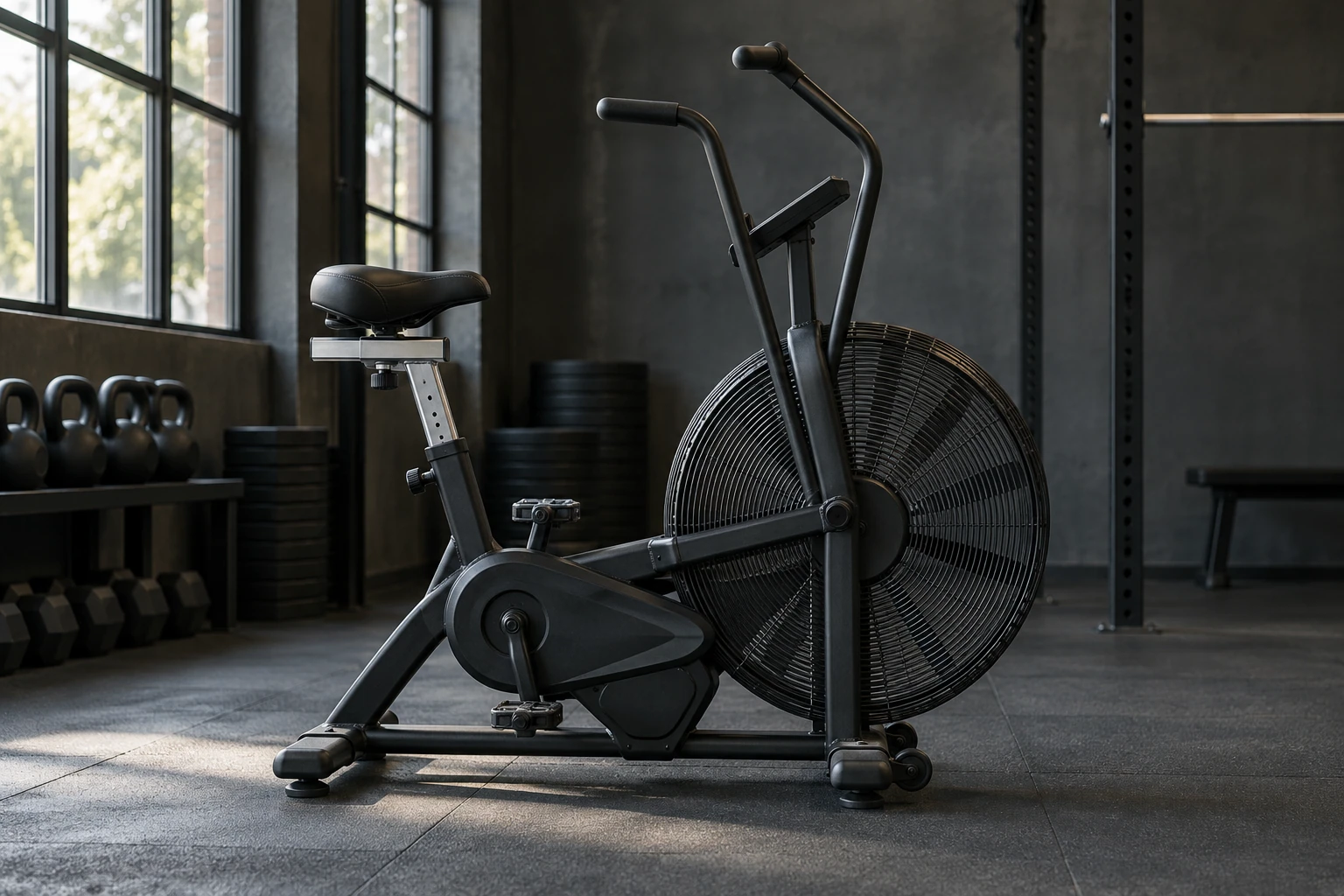
Yes. Zone 2 describes the effort, not a specific machine. A rower, air bike, stationary bike, elliptical, brisk walk, or easy run can work if you can keep the pace smooth and conversational. Choose an option that lets you hold a consistent effort without turning each interval into a sprint. If technique deteriorates or your breathing becomes hard to control, ease off.
Should I use my watch’s Zone 2 number?
Use it as a reference, not a universal prescription. Watches may set zones from different formulas or personal data, and the same zone label can describe different ranges across systems. Compare the reading with your breathing and perceived effort. If heart-rate readings seem inconsistent, or medication or a health condition affects your pulse, ask a health care professional about appropriate exercise intensity.
Does Zone 2 replace CrossFit workouts?
Not automatically. Zone 2 sessions emphasize steady aerobic work, while CrossFit programming may combine strength, skill, and higher-intensity conditioning. Which balance makes sense depends on your goals, schedule, and current training. Think of Zone 2 as one possible tool rather than a requirement for every athlete, and avoid adding so much extra work that it interferes with recovery or the training you value.