The plan
Murph is a demanding workout, and the challenge is not just the total number of reps. You have to manage two runs around a large block of calisthenics, while deciding how to divide that middle section and whether a weighted vest makes sense for you. The right choice depends on your current capacity, not on matching someone else’s time or version.
What is the prescribed Murph workout?
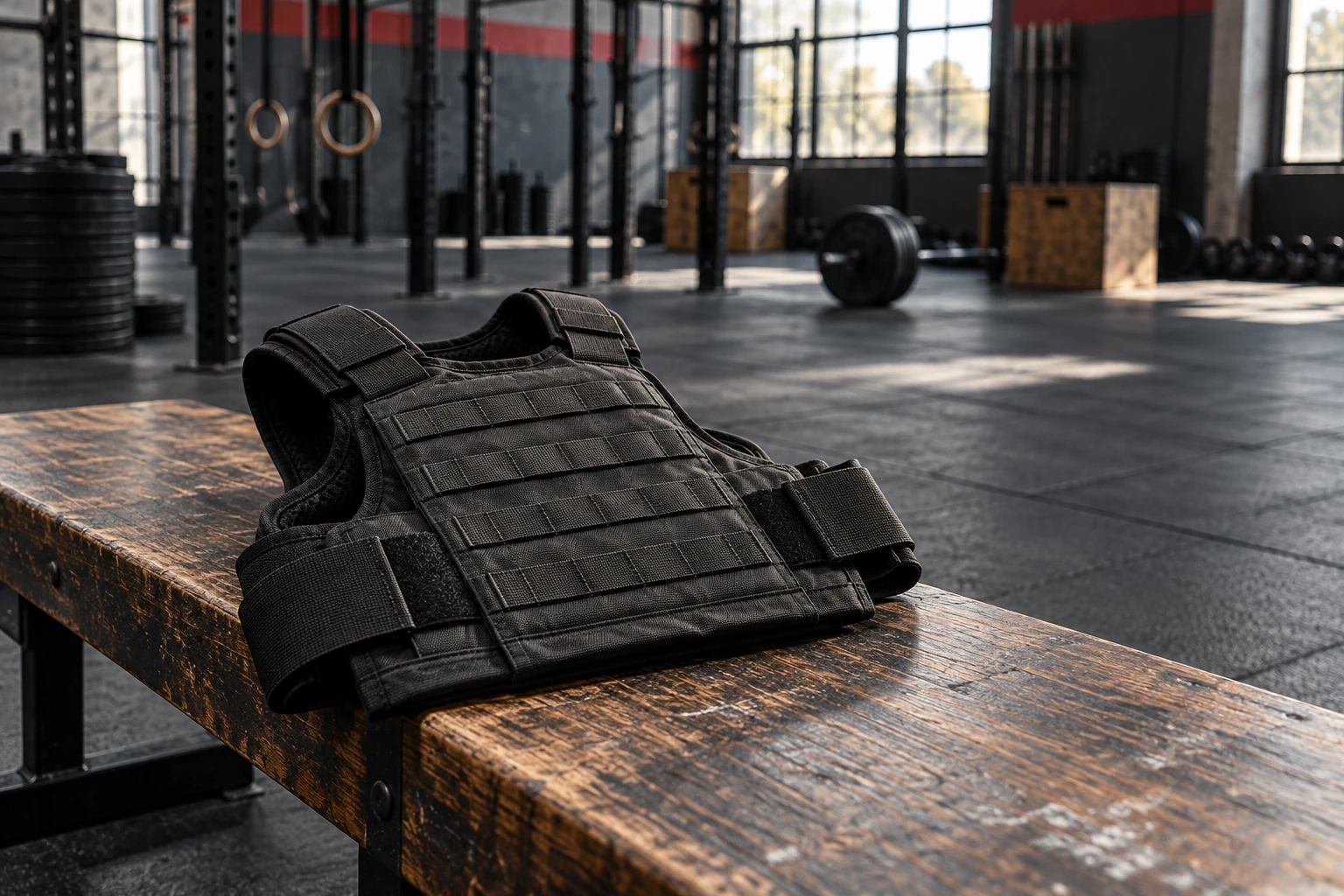
Murph is a timed Hero workout: run 1 mile, complete 100 pull-ups, 200 push-ups and 300 air squats, then run another 1 mile. CrossFit’s Murph benchmark listing permits partitioning the three movements in the middle and says to wear a 14- or 20-pound vest or body armor if you have one. The vest is an option, not an entry requirement.
The workout is named for Navy Lt. Michael Murphy. The Lt. Michael P. Murphy Memorial Scholarship Foundation biography gives his dates as May 7, 1976, to June 28, 2005, and identifies him as 29 when he died. Keeping that context in view can help you approach the workout with respect rather than treating the day as a race against other athletes.
You may see different versions called “Murph.” Keep the distinctions clear: the prescribed rep totals and runs make up the full version; partitioning changes the arrangement, not the totals; scaling changes volume, movements or distance. A modified session can still be challenging, but label the version honestly when you log it.
How should you choose a version?
Start with the movements you can perform under fatigue. Can you do pull-ups without your grip failing immediately? Can you repeat controlled push-ups without your midsection sagging or your range shortening? Can you squat and stand smoothly as your legs tire? Your answers matter more than whether you can complete one fresh set of each movement.
CrossFit lists an intermediate option with 1-mile runs and 50 pull-ups, 100 push-ups and 150 air squats. Its beginner option uses 800-meter runs around 10 rounds of 5 ring rows, 10 modified push-ups and 15 air squats. Those are distinct scaled formats, not alternative ways to claim the full prescribed volume. If you need different modifications, agree on them with a coach before starting and write them down.
The Fitness section is where you can keep movement quality and training decisions in view alongside the workout itself. If pain is changing how you move, stop rather than trying to push through it; consult a physician or physical therapist for persistent or concerning symptoms. Scaling is a training choice, not a diagnosis or treatment.
Should you partition the middle section?
For most athletes, partitioning gives the middle work a repeatable rhythm. One common arrangement is 20 rounds of 5 pull-ups, 10 push-ups and 15 air squats. That preserves all 600 prescribed reps in the middle while breaking them into smaller sets. Another arrangement is 10 rounds of 10, 20 and 30, but larger sets can become difficult if your capacity does not support them.
CrossFit’s benchmark page also describes the middle section as 10 to 20 rounds and suggests aiming to reach the second run by 25 minutes in its intermediate option. Treat that time as guidance for that specific option, not a universal cutoff or a promise about your finish time. If you are using the full version, choose a pace that lets you keep moving without turning every set into a max effort.
An AMRAP is a workout format in which you complete as many rounds or reps as possible within a set time. Murph is ordinarily for time, not an AMRAP, but the same attention to repeatable pacing applies. Use AMRAP pacing principles to think about sustainable sets and tracking, rather than assuming an AMRAP clock is part of Murph.
How can you warm up and set a pace?
Give yourself time to raise your temperature gradually, then rehearse the shapes you will use: easy running, shoulder and wrist movement, a few controlled pull-ups or an appropriate substitute, push-ups and air squats. Keep the practice work easy. A warm-up should help you check readiness and movement, not become another exhausting workout.
Choose a conservative pace for the opening mile. In the middle, use sets small enough that you can maintain consistent technique and take short, planned breaks before you are forced into long rests. For the 5-10-15 pattern, for example, you might split pull-ups into smaller sets while keeping push-ups and squats smooth. There is no need to make every round identical; adjust before form deteriorates.
CrossFit’s Murph training plan describes a 35-to-50-minute stimulus for its listed session, recommends keeping each run under 10 minutes, and advises considering a vest only if you have done the prescribed workout before or trained regularly with one. These are programming targets from that plan, not medical limits or expected finish times for every athlete. Use the Cindy workout’s round structure as a comparison for organizing repeated sets, not as proof that a particular pace is right for you.
What should you watch for during the workout?
Keep the pull-up reps controlled and stop a set before you lose safe control of the bar or your grip. On push-ups, lower and press through a consistent range while keeping your trunk steady. On air squats, maintain balance and a comfortable, repeatable depth. If you cannot preserve the movement, shorten the set, use an agreed modification or reduce the remaining volume.
Heat matters, especially when the runs are outdoors or the workout falls on a hot day. The CDC’s guidance for athletes exercising in heat advises pacing activity, choosing cooler times when possible, drinking more water than usual and stopping to get somewhere cool if you feel faint or weak. Arrange water and a way to get help before you begin. Do not treat dizziness, unusual weakness or worsening symptoms as a pacing problem to overcome; stop and seek appropriate medical help if needed.
The same principles apply to substitutions. If running is not a suitable option for you, choose a distance or machine alternative with a coach rather than improvising a hard replacement mid-workout. CrossFit’s training plan lists rowing and bike distances as possible run substitutions, but its particular distances belong to that plan’s programming. Do not assume every substitution creates an identical workload.
How do you check whether your choice worked?
After the workout, record more than the clock. Note the version, run distances, rep scheme, movement modifications, vest load if used, and any interruptions. Then consider whether your pace stayed controlled, whether the reps remained recognizable from start to finish, and whether the final run was still manageable. Those details tell you more about the session than a time separated from its context.
If you finished with consistent movement and without needing to force unsafe reps, your chosen version was a sensible training decision. If you had to stop repeatedly, lost control of the movements or felt unwell, use less volume or easier variations next time. A beginner workout you can scale at home may also offer a more suitable starting point before attempting the full workout. If you experience pain or have health concerns, consult a physician or physical therapist before deciding how to train.
Questions fréquentes
Does partitioning the reps change Murph?
The prescribed workout allows you to partition the pull-ups, push-ups and air squats as needed, so breaking up those reps is still within the written version. A format such as 20 rounds of 5 pull-ups, 10 push-ups and 15 air squats changes how you organize the work, not the total. A reduced-rep or modified-movement version is a scaled workout and should be recorded as such.
Should you wear a vest for your first Murph?
A vest is not a requirement for completing Murph. CrossFit lists body armor or a vest as an option, while its training plan says to consider one only if you have completed the prescribed version before or have trained regularly with a vest. If you are unsure, leave it off and focus on steady movement and sound reps.
How should you record a scaled Murph result?
Write down the version you completed, including run distance, rep totals, movement substitutions, partitioning and whether you wore a vest. That context makes comparisons more useful than a time alone: a reduced-volume version or ring-row substitution is not the same test as the full prescribed workout, even if both are worthwhile training sessions.