The plan
If running, box jumps, or double-unders feel like more impact than you want today, cardio does not have to mean stopping your workout or pushing through jumps. You can get moving with walking, cycling, rowing, or swimming, while keeping your feet grounded or your movement supported.
What should low impact cardio feel like?
Low impact cardio is aerobic exercise that limits repeated hard landings. It does not have to be easy, and it is not a specific training zone. A fast walk, steady bike ride, controlled row, or swim can all raise your heart rate without the repeated airborne-to-ground contact of running or jumping. The right choice is the one you can perform smoothly and consistently, at an effort that fits your goal and how you feel that day.
Keep the distinction practical: low impact is about the movement and contact; intensity is about the effort. For a moderate effort, the CDC’s talk test is a useful check: you can talk, but not sing. If you can only get out a few words before taking a breath, you are working at vigorous intensity. Use the test during the session rather than assuming that a certain machine setting or speed means the same thing for everyone. See the CDC’s intensity and talk-test guidance for the distinction.
Which no-jump option fits your day?
Think about what you want from the session, what equipment you have, and which movement you can do with control. These are starting points, not rankings.
Walking is the simplest place to begin. Choose a flat route or treadmill if you want a steady pace; add a gentle incline only if you can keep your stride comfortable. It is easy to shorten the session or turn around, but outdoor conditions and hills can change the effort quickly.
Cycling lets you adjust resistance without leaving the saddle. It can be a good option when you want to manage the pace closely or keep foot contact low. Set the seat so your legs can pedal smoothly, and start with light resistance before building effort. If your knees or hips feel uncomfortable, change the setup or choose another modality rather than forcing the cadence.
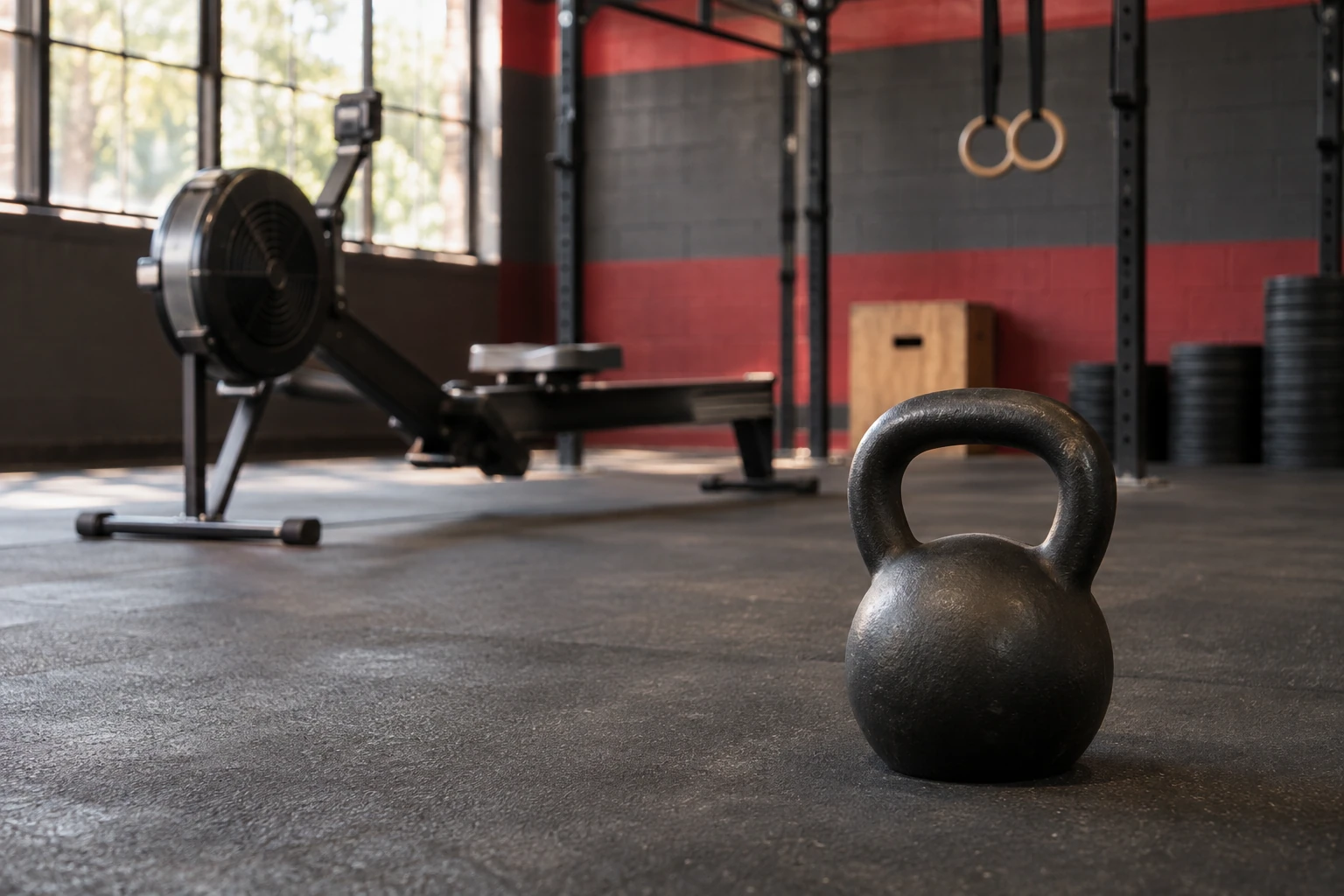
Rowing is available in many CrossFit gyms and recruits both legs and upper body. Keep the stroke controlled: push through the legs first, then open the hips and finish with the arms; reverse that order on the way forward. Avoid turning every stroke into a hard pull. A steady, repeatable pace is often a more useful first test than chasing the monitor.
Swimming and water exercise reduce the need for repeated ground contact and let you choose continuous laps or shorter intervals. They do require pool access and enough confidence in the water to exercise safely. ACSM includes walking, biking, water exercise, and swimming among aerobic options, and notes that sessions can be split into shorter bouts; its activity guidance for people with mobility limitations also mentions rolling and modified activities. The examples are options to consider, not a claim that every movement fits every athlete.
How do you choose between them?
Match the modality to the job you need it to do. If you want a low-fuss session, walk. If you want to control resistance in place, ride a bike. If you want to use equipment already at your box, row at a pace you can maintain. If pool access is convenient and swimming feels familiar, try water-based cardio. Rotate options when one starts to feel repetitive or when you want to spread the work across different movement patterns.
Your CrossFit schedule matters, too. A hard row before a workout with lots of pulling may leave your grip or back tired; a demanding bike effort can add fatigue before lower-body strength work. Keep the cardio easy enough that it does not undermine the priority of the day, or place the more challenging session after your main lifting if that better matches your goal. The order depends on the workout and your priorities; use the principles in choosing when to do cardio rather than treating one order as universal. For more training and movement topics, browse the fitness section.
How can you start without overdoing it?
Use a simple progression that changes one variable at a time. First, choose a modality and a pace you can sustain with smooth technique. Next, repeat a manageable session before adding more time, resistance, or speed. If the movement gets choppy, your posture changes, or you cannot hold the intended effort, ease off. Avoid increasing duration and intensity together just because the first session felt good.
For a concrete weekly reference, federal guidance recommends adults aim for 150 to 300 minutes of moderate-intensity aerobic activity, or 75 to 150 minutes of vigorous activity, across the week, along with muscle-strengthening activity on at least 2 days. Those are population-level targets, not a requirement to begin there. The guidelines also state that activity can be spread across the week. If you are building a habit, start with a smaller amount that fits your current routine, then add gradually. The Physical Activity Guidelines for Americans provide the broader adult recommendations.
One workable template is a short warm-up at an easy pace, a steady main segment at your chosen effort, and a gradual ease-off at the end. Keep the exact duration flexible: the goal is to finish feeling that you could have maintained control, not to hit a machine’s calorie display or copy another athlete’s pace. If a session is meant to prepare you for lifting, keep it brief and easy enough that you feel ready to train rather than pre-fatigued.
How do you know the choice is working?
Check the result after the session and again before repeating it. Did the movement stay smooth? Could you control the effort and stop when you wanted? Did the session fit around your strength work without making the next workout unexpectedly harder? Those are more useful signals than comparing distance or output across different machines.
If the effort felt too light and you want a moderate aerobic session, first nudge up one thing: pace, resistance, or time. If you lost control, felt unusually drained, or noticed discomfort, reduce the demand or switch activities. Low impact does not mean zero stress, and it does not prevent every injury. If pain persists or you have a medical concern, seek advice from a physician or physical therapist before continuing to train through it.
Questions fréquentes
Does low impact cardio mean low intensity?
No. Low impact describes how the movement manages contact with the ground, not how hard your heart and lungs are working. You can make cycling, rowing, swimming, or brisk walking more demanding by changing your pace, resistance, or terrain. Start at a level that lets you keep good control, then use your breathing and the talk test to judge effort.
Can I count a low-impact session toward weekly cardio?
Yes, if the activity reaches moderate or vigorous intensity. The CDC says adults can work toward 150 minutes of moderate activity or 75 minutes of vigorous activity each week, or an equivalent combination. A gentle spin or easy stroll may not reach moderate intensity for you, so consider both how long you moved and how hard you worked.
What should I do if low-impact cardio causes pain?
Stop or change the activity if pain appears or worsens; do not treat a low-impact label as a guarantee that a movement will suit you. Try reducing resistance, pace, range, or duration only if that feels comfortable. For persistent pain, a new injury, or uncertainty about safe exercise, ask a physician or physical therapist for individual guidance.