
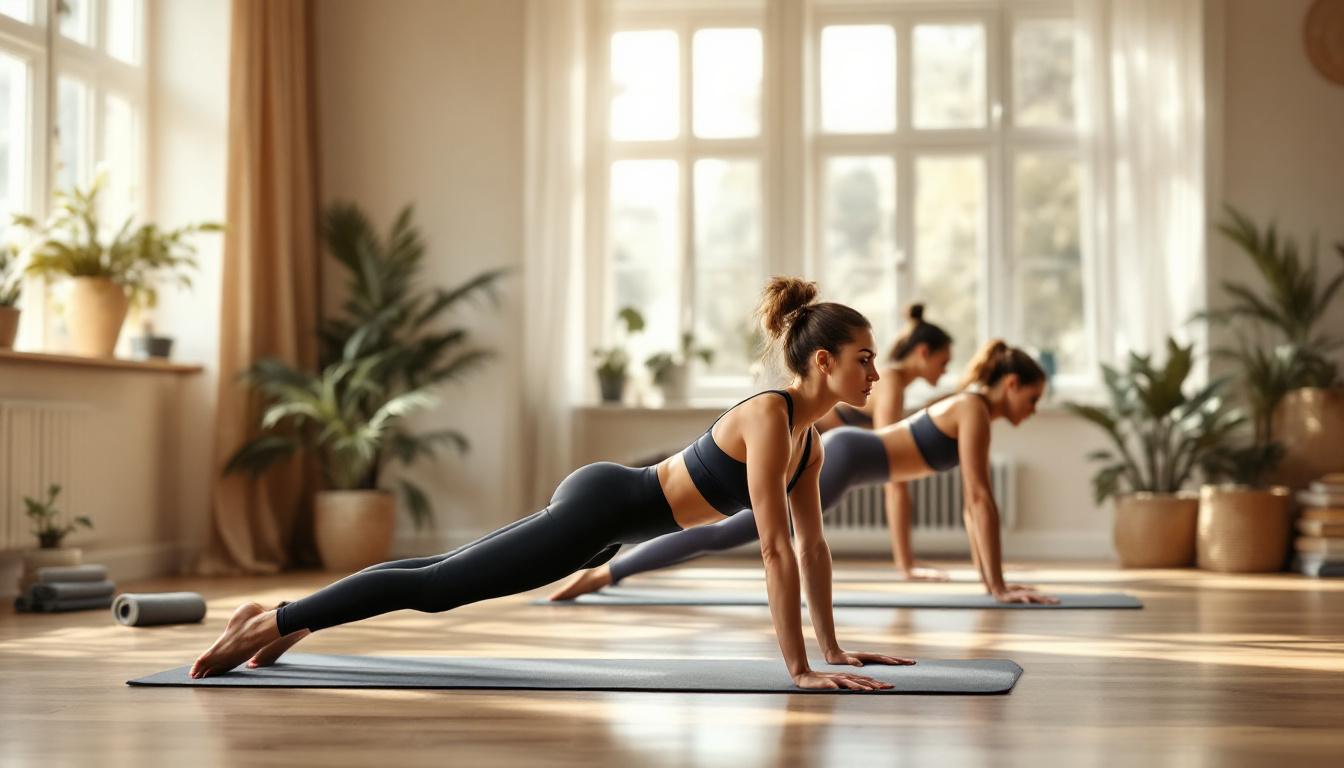

Yoga offers a unique path to strengthening core areas like abs and glutes with minimal moves. This simplicity appeals to those seeking effective body toning without complicated routines. Contrary to common belief, just two movements can target these muscles intensely, promoting strength and fitness. Inspired by a seasoned yoga instructor’s insights, these accessible exercises provide a strategic approach to building core workout strength while improving overall balance and stability. These simple moves champion quality over quantity in fitness routines, allowing consistent practice with visible results.
Yoga Instructor Breaks Down Simple Moves
In a fitness landscape often cluttered with excessive exercises, this yoga instructor highlights the power of two straightforward moves for abs and glutes. These exercises prioritize functional strength and mindful engagement, connecting breath control with movement precision. The key value lies in their ability to enhance muscle tone, particularly the deep core and gluteus muscles essential for posture and injury prevention. Unlike high-impact workouts, these moves offer low-impact yet potent muscle activation, adaptable for diverse fitness levels. Incorporating these moves can complement any training regimen, including strength-focused programs or endurance sports such as running or CrossFit.
What makes these moves stand out is their focus on multi-muscle coordination. For instance, engaging the glutes also stabilizes the hips, which in turn supports abdominal engagement. This synergistic approach not only sculpts the body but improves balance and performance efficiency. Through precise coaching, practitioners learn to activate muscles correctly, reducing the risk of injury common in hurried or improperly executed routines. This balance of efficiency and safety, backed by expert teaching, makes these simple moves essential for anyone prioritizing body toning in 2025’s fitness environment.
Experts in strength and conditioning often point to the value of such bodyweight flows—movements that require no equipment yet deliver remarkable results. Even those skeptical of yoga’s athletic benefits acknowledge the practicality of these moves in enhancing muscle tone. One can pair these exercises with seated leg strengthening techniques to further develop lower-body power. Similarly, they complement standing ab work to refine the waistline’s appearance, vital for a balanced physique.
How These Two Moves Target Abs and Glutes
These two fundamental yoga movements engage multiple muscle groups simultaneously, creating a highly effective core workout. Abs and glutes are often targeted separately in conventional training, but these yoga moves integrate the two for optimal functional strength. The first move emphasizes deep core engagement through a controlled hollow body position that activates the transverse abdominis alongside rectus abdominis, enhancing core stability. Simultaneously, the glute muscles support the lower back and hips, reducing postural imbalances.
The second move involves a dynamic hip extension that targets gluteus maximus strength while maintaining abdominal tension. This motion not only sculpts the glutes but also boosts endurance in the lower back region, which is crucial for athletic performance. By incorporating mindful breathing techniques taught by yoga instructors, practitioners maximize muscle oxygenation and control, which accelerates strength gains and improves body toning. Consistency with these exercises, ideally practiced daily or several times a week, creates a foundation for more advanced core workouts.
These moves also encourage neuromuscular coordination, which translates into better performance across various physical activities. Athletes training for Hyrox competitions or distance running will find such core stability and glute strength beneficial for maintaining posture and preventing fatigue. For fitness enthusiasts, alternating these moves with targeted standing ab and waist exercises can diversify routines while reinforcing overall strength.
Scientific Insights into Body Toning with Yoga Movements
Research increasingly supports yoga’s role in enhancing muscular strength, specifically in core and gluteal regions critical for injury prevention and mobility. Studies demonstrate that yoga moves focusing on isometric holds and controlled range of motion stimulate muscle fibers, promoting hypertrophy similarly to targeted strength training methods. The sustained engagement required for these simple moves encourages endurance development, crucial for daily functional activities and athletic disciplines. More intriguingly, yoga also improves proprioception, which assists in balance and motor control critical to performing complex functional movements.
Functional strength achieved through these moves supports metabolic health by increasing lean muscle mass, which enhances basal metabolic rate and aids in weight management. This dual benefit of fat reduction and muscle toning explains why such yoga flows earn recognition as effective body toning exercises. Additionally, the mindful aspect of yoga reduces cortisol levels, indirectly supporting muscle retention and recovery. Integrating these moves into daily practice can therefore help achieve a toned silhouette, beyond traditional gym workouts.
In professional circles, the importance of simplicity in exercise design is gaining traction. This approach respects biological limits and promotes sustainable fitness habits. These yoga moves exemplify this philosophy, demonstrating how focused practice on fundamental movements yields long-lasting results. Their adaptability means they can be tailored to individual needs, whether in rehabilitation settings or high-performance training. Their inclusion in fitness programs reflects the growing acceptance of yoga as an impactful strength exercise.
Practical Tips to Maximize Results from These Yoga Moves
Performing these two yoga exercises correctly requires attention to alignment and breathing. To maximize benefits, maintaining core engagement throughout each movement is essential. This approach prevents compensation by weaker muscles and ensures the abs and glutes do the bulk of the work. Slow, controlled transitions between poses promote muscle activation and reduce injury risk. Beginning practitioners might use modifications such as props or reduce hold times to build foundational strength safely.
Integrating these moves into a routine of about 10 to 15 minutes, repeated 3 to 4 times weekly, suffices for noticeable improvements. Complementary practices like focused warm-ups or post-session stretches enhance muscle recovery and flexibility, reducing soreness. Coupling these exercises with more comprehensive strength programs or cardio can accelerate fat loss and overall conditioning. Nutrition also plays a critical role; adequate protein intake supports muscle repair, while hydration assists performance and recovery after exercise.
Many practitioners combine these yoga moves with additional low-impact exercises to develop specific areas further. For example, seated leg exercises improve related muscle groups and can increase lower limb endurance. Adaptability ensures that, regardless of fitness background, individuals experience progression without overtraining. The simplicity of these moves also makes them accessible for home workouts or busy schedules, emphasizing consistency over complexity for body toning success.
Integrating These Moves into Broader Fitness Regimens
These yoga-inspired exercises complement various fitness disciplines, from CrossFit to running, by fortifying key muscle groups responsible for movement efficiency and injury prevention. Their low-impact nature makes them ideal for recovery days or as activation sequences before intense sessions. Athletes benefit from the enhanced balance, posture correction, and core stability provided, which translate into improved performance and reduced fatigue. Fitness coaches now advocate incorporating these moves into warm-ups or cool-downs for comprehensive training coverage.
Moreover, practitioners engaging in long-duration activities find these moves strengthen the glutes and core, muscles critical to maintaining alignment and preventing compensatory injuries. This synergy between yoga and functional fitness exemplifies modern trends toward holistic training approaches that value body toning through smart, methodical exercise selection. The accessibility of this routine also encourages adherence, a cornerstone of lasting lifestyle change.
For those interested, detailed guidance and progressions can be explored through credible online resources, offering videos and written instructions to refine technique. This supports self-directed practice and enhances motivation. Embracing these two simple yoga moves for abs and glutes ensures an efficient, balanced approach to fitness that aligns with contemporary understanding of strength and flexibility.
