
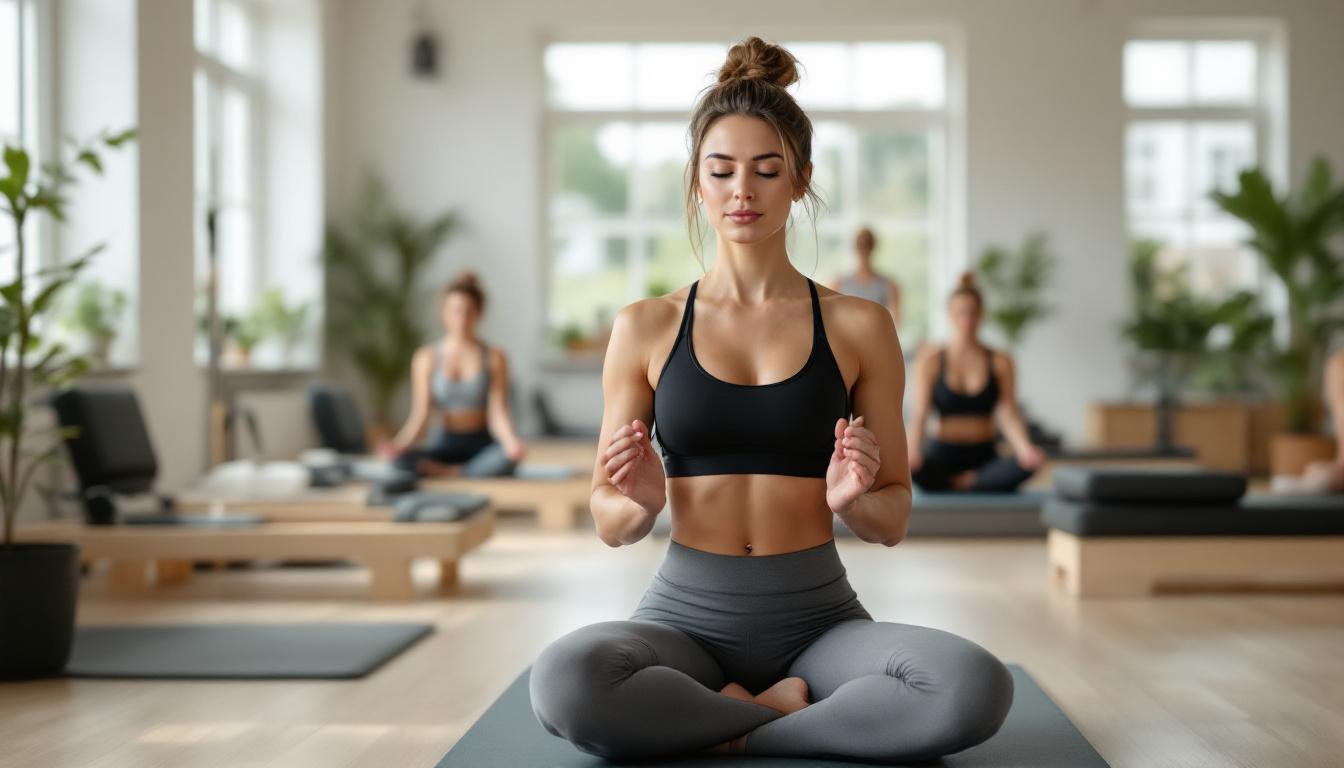

Shifting from traditional crunches to Pilates core holds has transformed abdominal strength and overall fitness for many enthusiasts. Unlike the repetitive flexion of crunches, Pilates emphasizes isometric holds, promoting deep muscular engagement and better spinal support. This transition underscores the importance of functional core stability over mere aesthetic muscle definition. As core strength underpins performance in CrossFit, Hyrox, and running, Pilates core holds offer athletes and casual fitness fans a refined approach that improves endurance and reduces injury risk.
Understanding Pilates Core Holds for Better Abs
Pilates core holds focus on sustained, controlled contractions that engage multiple abdominal muscles simultaneously. Unlike crunches that primarily target the rectus abdominis through repetitive spinal flexion, Pilates incorporates the transverse abdominis and obliques, which are essential for core stability. This multidimensional engagement helps build a foundation of strength that supports functional movement in daily activities and athletic pursuits. By holding positions like the “plank” or “hundred” for extended durations, practitioners develop muscular endurance and neuromuscular control.
For instance, the “Pilates 100,” where the body lies flat and the shoulders lift slightly while arms pump, strengthens the core without excessive strain on the neck or lower back, common issues in crunch-based routines. The emphasis on breath coordination enhances oxygen flow and encourages more complete muscle activation. This approach can lead to better posture, reduced lower-back pain, and enhanced athletic performance.
Research has shown that isometric exercises such as core holds improve muscle activation patterns more effectively than crunches. Engaging the deep core muscles improves spine support, critical for sports requiring abrupt movements, including Hyrox, where core stability aids in strength transitions between varied functional exercises.
Why Crunch Alternatives Matter for Core Strength
Crunches have dominated abdominal training traditionally, yet their limitations have become increasingly clear. Repetitive spinal flexion inherent in crunches can lead to decreased spinal health when performed excessively or with poor form. This is especially a concern for people with lower back vulnerabilities or those needing greater functional core stability over muscle isolation. Crunch alternatives like Pilates core holds offer a safer and more comprehensive way to strengthen the core.
These alternatives recruit stabilizer muscles that maintain pelvic alignment and spinal integrity. Unlike crunches, which create stress in thoracic spine flexion, Pilates core holds distribute workload across the entire core musculature, improving dynamic balance. This redistribution is crucial for athletes whose sports demand multi-directional stability, such as running or CrossFit, where core strength translates into more effective power transfer and injury prevention.
The shift to Pilates-inspired core workouts also aligns with evolving fitness routines that prioritize longevity and injury resilience. For example, integrating chair workouts with core-focused Pilates techniques replicates daily movement while enhancing muscle coordination. This functional approach elevates abdominal training from aesthetic to foundational fitness.
How Pilates Exercises Boost Core Stability and Strength
Core stability is the cornerstone of any effective fitness routine, and Pilates exercises are uniquely designed to enhance it. Core holds in Pilates blend static strength with dynamic control, teaching the body to stabilize the lumbar spine during movement. This is essential not only for aesthetic abs but for injury prevention and athletic performance. The integration of breath, form, and muscle engagement builds a resilient core.
Take the “plank” and “side plank”—two popular Pilates core holds. Both demand sustained isometric engagement of the entire trunk, shoulders, and hips. This holistic muscle activation supports the spine from all angles, improving posture and reducing chronic pain often associated with weak abdominal stabilizers. In CrossFit and Hyrox competitions, where diverse physical challenges test endurance and strength, a stable core improves overall power output.
Moreover, Pilates core holds can be scaled to different fitness levels, making them accessible whether training for daily health or elite fitness challenges. Their inclusion in abdominal training programs has been advocated by many physiotherapists and fitness experts, as they facilitate proper alignment and functional strength over repetitive, less balanced efforts like crunches.
Integrating Pilates Core Holds Into Your Fitness Routine
Replacing crunches with Pilates core holds can enhance your fitness routine’s effectiveness and sustainability. Implementation starts with focusing on form — maintaining neutral spine alignment and controlled breathing. It’s best to perform core holds in short intervals, gradually increasing duration as strength develops. This method prevents fatigue-induced form breakdown, a common cause of injury in core workouts.
For example, a beginner might start with 20-second planks, resting briefly before repeating for 3–4 sets. Advanced practitioners may hold for 60 seconds or more, incorporating variations such as lifting a leg or arm to increase challenge. Combining Pilates core holds with other functional exercises can provide a balanced core workout that supports broader performance goals in Hyrox events or endurance running.
Resources such as chair workouts for strength offer practical approaches to add variety and adaptability to Pilates core holds. These workouts simulate real-life postures and promote stability, making the core stronger and more responsive in everyday movements and athletic endeavors.
Comparative Benefits of Pilates Core Holds Versus Traditional Crunching
When comparing Pilates core holds to traditional crunches, several distinct advantages stand out. Crunches mainly activate the superficial abdominal muscles and place frequent stress on the neck and lower back. Pilates holds, in contrast, engage deep stabilizing muscles, fostering better overall core strength and spinal health. This distinction is pivotal for long-term health and athletic progress.
Extensive research in sports science reveals that Pilates core holds enhance muscle endurance and balance more effectively. These exercises contribute to improved biomechanical efficiency during complex movements required in fitness disciplines such as CrossFit and Hyrox. Participants often report less fatigue and fewer injuries integrating Pilates core holds into their abdominal training.
To illustrate this benefit, the following table summarizes key differences between both methods:
| Aspect | Crunches | Pilates Core Holds |
|---|---|---|
| Muscle Engagement | Primarily rectus abdominis | Deep core muscles, transverse abdominis, obliques |
| Movement Type | Dynamic, repetitive spinal flexion | Static isometric holds and controlled breathing |
| Spinal Health Impact | Potential spinal compression risk | Promotes spinal stability and alignment |
| Functional Benefit | Limited to abdominal muscle isolation | Enhances overall core stability and performance |
| Suitability | Less suitable for injury prevention | Recommended for longevity and injury resilience |
The principle of prioritizing core stability aligns with modern fitness trends emphasizing longevity and sustainable training. Pilates core holds fit seamlessly into protocols aiming to build strong, functional abs rather than just visual muscle definition.
