
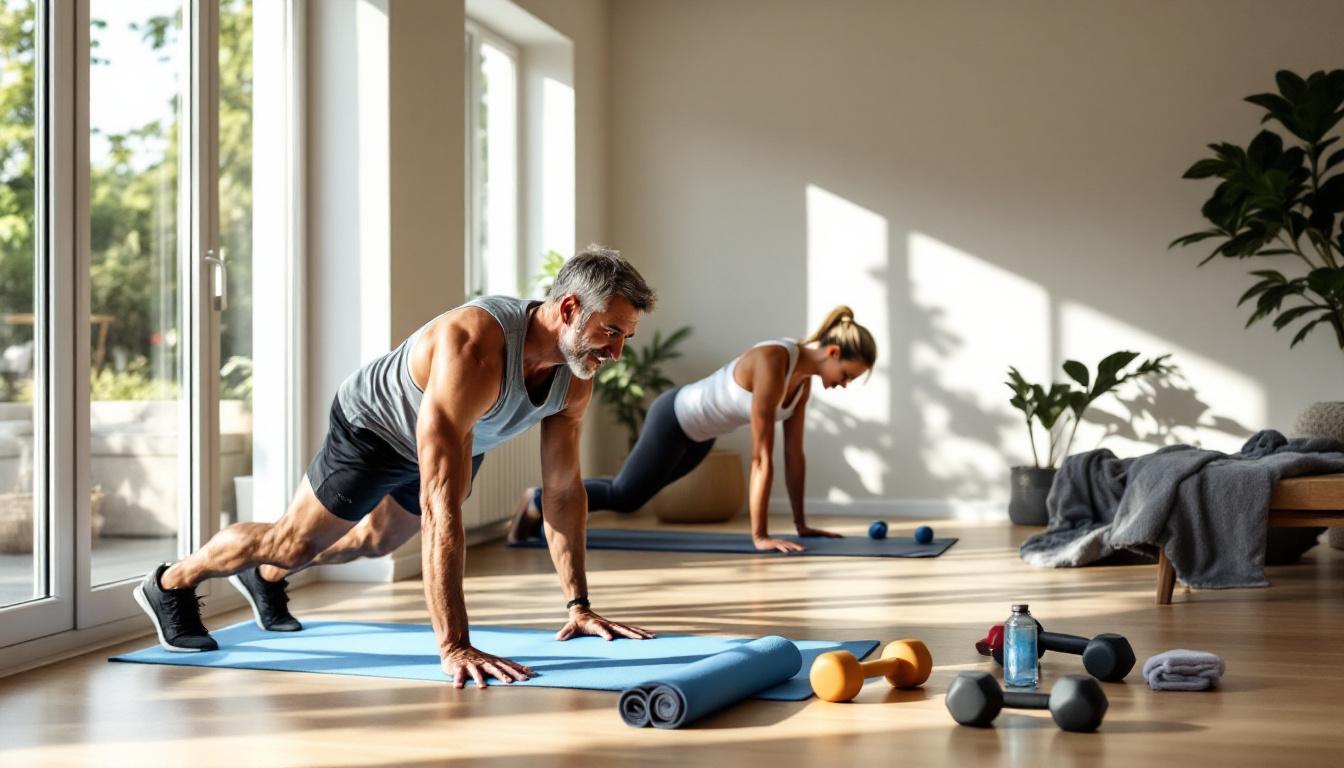

Maintaining strength and vitality beyond 50 is not just about genetics but smart, consistent daily habits. These six bodyweight exercises have gained recognition for their effectiveness in promoting muscle maintenance, improving functional fitness, and enhancing overall health without the need for equipment. Aging does not have to mean weakening; instead, it can be an opportunity to build a resilient, stronger body than many younger adults. Health experts emphasize that these moves, performed regularly at home, become the cornerstone of longevity-focused fitness routines.
Effective Bodyweight Exercises for Muscle Maintenance
Muscle loss accelerates naturally after age 50, leading to frailty and diminished physical independence if unaddressed. Studies in 2025 show that incorporating targeted daily exercises can reverse this trend and help maintain strength comparable to, or exceeding, people in their 30s. Bodyweight exercises are particularly advantageous over traditional gym workouts because they are accessible, joint-friendly, and adaptable to individual fitness levels. Among these, bodyweight squats stand out due to their comprehensive engagement of lower body muscles, including the quadriceps, glutes, and core.
The squat improves mobility and balance, critical for preventing falls and injuries as one ages. Performing squats daily enhances functional movements needed for everyday activities, from climbing stairs to lifting objects safely. The simplicity of squats allows for quality control in form, making it easier to avoid the common mistake of knee-over-toe positioning, which can stress joints. Incorporating variations like wall sit holds or pause squats can further intensify muscle activation while preserving joint health.
Next on the list is the wall push-up. Unlike traditional push-ups, wall push-ups reduce joint strain, focusing on strengthening the chest, shoulders, and arms safely. For those seeking more challenge, knee push-ups introduce a progression that builds strength gradually. This layered approach ensures that anyone over 50 can adjust intensity depending on their capability, making fitness sustainable and enjoyable.
These exercises exemplify the principle of functional fitness: maintaining movements that support real-life physical demands. To support longevity, regular practice of these moves also improves cardiovascular health, coordination, and mental wellbeing as they engage multiple muscle groups simultaneously. Incorporating these into a daily routine combats typical aging declines by fostering neuromuscular connections and strengthening muscle fibers lost to inactivity.
How Mobility Enhances Aging Fitness
Maintaining flexibility and joint health is crucial for adults over 50 striving to stay stronger than many younger counterparts. Joint stiffness and reduced range of motion often lead to discomfort and reluctance to stay active, accelerating muscle loss. Exercises like glute bridges and bird dogs specifically target muscles that support the hips, lower back, and core, which are vital for daily posture and stability.
Glute bridges engage the hamstrings, glutes, and lower back muscles—regions often weakened by sedentary lifestyles. Strengthening these areas contributes directly to reduced lower back pain and better posture, thus improving confidence and balance. Holding the bridge position for a few seconds during each repetition enhances stability, which is essential to prevent falls, a significant concern in aging populations.
Bird dog exercises further promote core and lower back stability by challenging balance and coordination without needing any equipment. Consistent practice improves spinal support and overall functional movement, enabling safer, more fluid body mechanics. Together, these moves foster mobility that prolongs active lifestyles, mitigating some common challenges linked to aging.
Experts highlight that integrating these motions daily can ease arthritis symptoms and improve proprioception, making everyday environments easier to navigate. They also complement strength-building exercises effectively by balancing muscle groups through controlled, deliberate movements that honor the body’s natural limitations.
Building Balance and Endurance with Step-Ups and Planks
Balancing strength with endurance is fundamental to aging well. Step-ups, performed on stairs or a sturdy platform, target key leg muscles—the quadriceps, hamstrings, and glutes—while also improving balance. This exercise mimics functional movements like stair climbing, which is vital for maintaining independence. Regular step-ups enhance coordination by requiring controlled movement and stability, significantly reducing fall risk and promoting confidence in mobility.
The plank is acclaimed for its efficacy in building core strength and endurance. Whether performed on elbows or hands, planks engage a wide range of muscles—core, shoulders, and back—with minimal joint stress. Holding a plank position develops isometric strength that translates into improved posture and overall body control. For people over 50, core integrity is crucial as it supports balance and reduces the likelihood of back injuries during routine activities.
Expert trainers recommend starting with shorter durations and progressively increasing hold times to build endurance safely. These exercises also contribute to enhanced metabolic health, fueling muscle maintenance and fat loss. Combining step-ups and planks in a workout routine embodies the essence of functional fitness: exercises that improve real-world performance while promoting longevity.
Implementing these moves daily ensures a well-rounded routine that addresses strength, balance, coordination, and endurance. This thoughtful approach fosters resilience and energy throughout the day, enabling active social and recreational lifestyles that significantly improve quality of life in later decades.
Cardiovascular Health Through Low-Impact Marches
High knees or standing marches are excellent low-impact alternatives for boosting heart rate and coordination without the jump impact that can challenge aging joints. This exercise targets the core and legs while promoting cardiovascular health, an aspect critical for people over 50 managing aging-related heart risks. Regular performance of standing marches improves circulation and stamina, contributing to overall wellness.
Unlike higher-intensity cardio, these moves can be safely done indoors at a comfortable pace, making them adaptable to various fitness levels. This modality encourages daily consistency by removing barriers like joint pain or equipment necessity. A smooth rhythm in marches also encourages breath-control and mindfulness, offering mental health benefits alongside physical gains.
Incorporating the standing march as a warm-up or cardio component within a daily bodyweight routine enhances endurance and prepares the body for more challenging moves. Its simplicity and efficiency embody the spirit of functional fitness for aging, aligning strength with cardiovascular benefits.
Starting and Progressing Safely: Reps and Routine Tips
According to longevity experts and trainers, beginning with one set of 10 repetitions daily for each bodyweight move provides a sustainable entry point for most individuals over 50. This prevents injury and encourages habit formation without overwhelming the body. Gradual progression can include increasing repetitions, adding sets, or integrating variations like banded plank bird dog for additional core challenge.
Establishing a consistent daily practice allows for steady strength gains, improved mobility, and enhanced confidence. For those motivated by data, measuring progress through strength assessments and mobility improvements reinforces commitment. It’s important to focus on form over speed, ensuring movements honor the body’s capabilities and limitations.
Other practical tips include varying the order of exercises to maintain engagement, combining strength moves with light cardio like walking arm exercises, and prioritizing recovery with proper hydration and sleep. Reliable sources advocate these bodyweight exercises as foundational components for anyone seeking to improve fitness over 50 by integrating strength and functional health in a sustainable, equipment-free format.
- Start modestly: one set of 10 reps daily.
- Focus on form: quality beats quantity.
- Gradually increase intensity: add sets or reps.
- Mix with light cardio: such as walking arm exercises.
- Prioritize recovery: hydration and restful sleep.
Alongside bodyweight moves, informed decisions about exercise types enhance results. For example, choosing cardio vs strength training carefully based on individual goals can maximize benefits. Staying consistent with daily workouts magnifies long-term muscle retention and functional capacity, building a foundation for lifelong health and independence.
