

After the age of 55, maintaining and building muscle strength becomes a crucial part of healthy aging. Yet many assume that lifting heavy dumbbells is the only way to achieve this goal. The truth is, chair workouts provide a low-impact, practical approach to strength training that can surpass traditional dumbbell routines for people in this age group. These exercises focus on functional muscle activation, balance, and joint protection, enabling seniors to build meaningful strength without stressing the body. Understanding why chair-based moves are so effective opens up new pathways for anyone looking to stay active, healthy, and strong beyond their mid-50s.
Why Chair Workouts Outperform Dumbbells After 55
For individuals over 55, the body undergoes changes that can affect muscle mass, joint health, and overall mobility. Heavy dumbbells can sometimes exacerbate joint pain or lead to improper form, increasing injury risk. Chair workouts offer a safer alternative focused on low impact exercises that engage deep stabilizer muscles crucial for aging and strength. By incorporating controlled movements while seated or using the chair for balance, these exercises emphasize neuromuscular coordination, flexibility, and core engagement—areas often neglected by conventional dumbbell routines.
Unlike traditional dumbbell training, chair workouts dynamically train functional strength, preparing muscles for everyday tasks such as standing, climbing stairs, or carrying groceries. A seated or supported position also reduces fall risk, a concern prominent in senior fitness. Research shows these patterns effectively strengthen shoulders, legs, and core with less strain, making them ideal for sustained progress over time. Home workouts based on chairs also require minimal equipment, encouraging consistency and adherence among older adults.
This approach resonates with recent fitness trends emphasizing functional capacity rather than just muscle bulk. For example, a study from 2023 found seniors practicing chair resistance training improved gait speed and balance significantly more than those solely lifting weights. The added benefit is enhanced confidence and independence in daily life, underscoring why this method builds more strength than dumbbells after 55.
Five Chair Workouts That Target Full-Body Strength
Implementing chair workouts effectively demands a strategic focus on major muscle groups using movements tailored for active seniors. Here are five key chair exercises proven to build robust strength after 55:
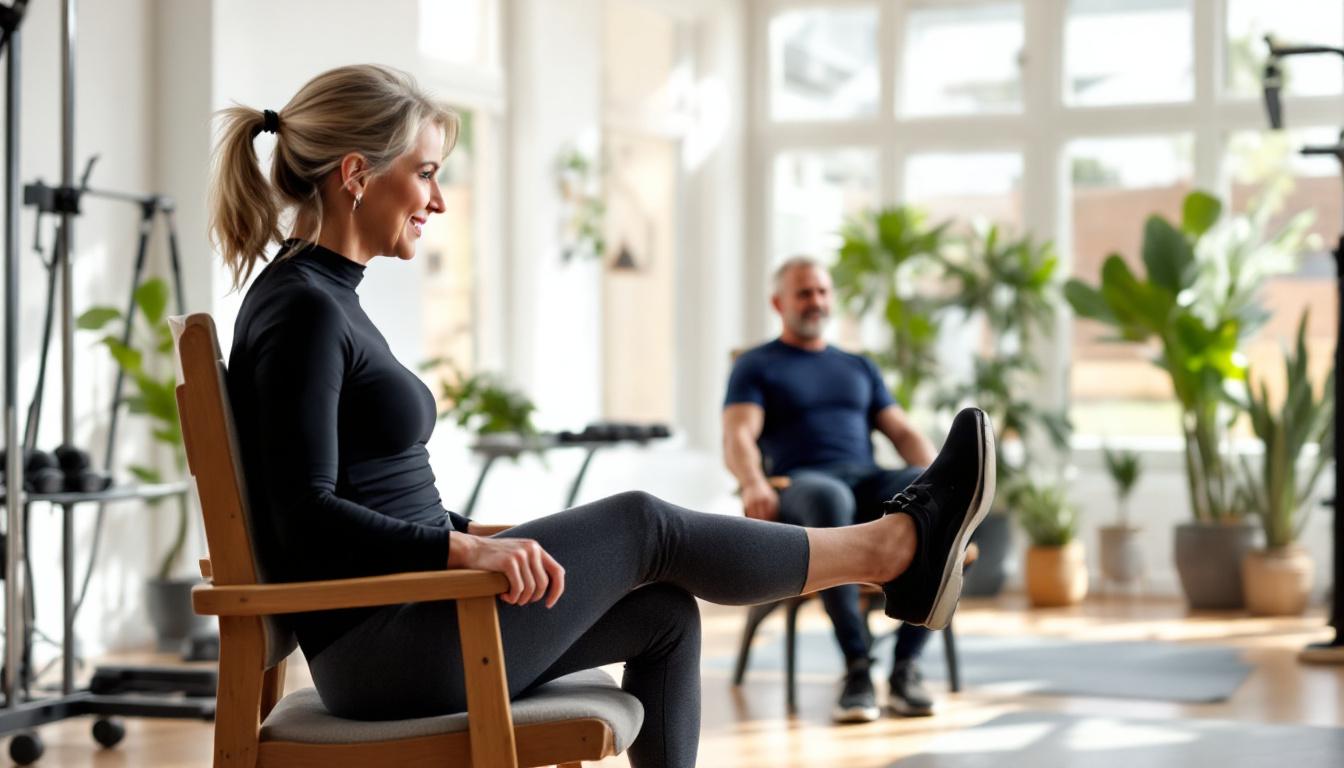
- Seated Leg Extensions: While sitting upright with feet flat on the floor, extend one leg straight out and hold for a few seconds before lowering. This move strengthens the quadriceps and improves knee stability.
- Chair Push-Ups: Using the chair for support, perform push-ups by placing hands on the seat and lowering the chest towards the chair. This develops upper body strength, including the chest, shoulders, and triceps.
- Seated Rows with Resistance Bands: Anchoring a resistance band around the chair’s legs, pull bands towards the torso to activate back muscles and improve posture.
- Calf Raises Holding the Chair Back: Standing behind the chair and holding the backrest, lift heels off the ground to work the calves and enhance ankle stability.
- Seated Torso Twists: Sitting upright, engage the core muscles by twisting the torso slowly to each side. This exercise targets obliques and enhances rotational mobility.
Each exercise not only targets muscle building but also enhances balance and coordination, critical components of senior fitness. These movements can be scaled by adjusting repetitions, speed, or adding light resistance like bands, allowing users to customize intensity safely. Consistency with these chair workouts has shown to improve muscle activation and functional strength significantly without the muscle soreness or joint stress often linked to dumbbells.
Strength Training Benefits Specific to Exercise Over 55
The advantages of chair workouts extend far beyond muscle size. After 55, maintaining muscle mass plays a pivotal role in metabolic health, bone density, and mental well-being. Physical activity using chair-based resistance training directly combats sarcopenia—the age-related decline in muscle mass and strength. This leads to better posture, reduced risk of falls, and improved endurance for daily tasks.
Moreover, chair exercises promote joint health through controlled range of motion that reduces inflammation and preserves cartilage. They fit perfectly into home workouts where accessibility and safety take precedence. Strength built from chair routines translates into enhanced independence, allowing seniors to remain active without fear of discomfort or injury.
Besides physiological effects, studies report significant psychological benefits, including improved mood and lowered anxiety related to physical limitations. This creates a holistic model wherein aging adults feel empowered rather than constrained by their fitness journey. Support for this approach can be found in expert-guided programs such as those shared on morning exercises for over 50 that emphasize gentle yet effective routines tailored to this age group.
Adapting Chair Workouts for Progressive Resistance Training
One common misconception is that chair workouts lack intensity or progression options compared to dumbbells. However, a variety of adaptations enable progressive resistance training that continually challenges muscles for ongoing strength gains. Incorporating resistance bands, ankle weights, or even small handheld weights can increase load while maintaining proper form and low impact.
Alternating tempo is another valuable strategy. Slowing down movement phases or pausing during holds increases time under tension, which is a key driver for muscle building after 55. Additionally, increasing repetitions or sets gradually encourages endurance development alongside strength.
For instance, beginning with seated leg raises without weights and progressing to adding ankle weights or bands amplifies the challenge effectively. Chair push-ups can move from support with full hand placement to fingertip holds for greater upper body engagement. These modifications keep workouts stimulating and prevent plateaus often seen in static dumbbell routines.
Consistency coupled with smart progression in chair workouts has proven results, allowing seniors to enjoy long-term strength improvements while reducing injury risks often linked to heavier weight training. It is important to consult with healthcare or fitness professionals to tailor routines that suit individual needs and limitations for optimal outcomes.
Integrating Chair Workouts Into Daily Routines for Lasting Results
Effectively building strength after 55 relies heavily on adherence and integrating exercise into regular lifestyle patterns. Chair workouts are uniquely suited for this purpose due to their convenience and adaptability for home use. Establishing a daily routine of short sessions—15 to 30 minutes—can yield significant improvements within weeks.
A practical approach includes performing chair exercises first thing in the morning or during breaks in the day. This fits seamlessly into busy or restricted schedules and encourages habit formation. Chair-based movements often double as mobility drills, preparing the body for other activities such as walking or gardening.
Additionally, combining chair workouts with other fitness modalities like Pilates enhances core strength and flexibility. There are specialized Pilates exercises designed for older women over 60 that complement chair strength training well, as outlined in Pilates exercises for women 60+. This synergy supports holistic muscle building and functional fitness.
To stay motivated, seniors can track progress through simple logs noting repetitions or perceived exertion. Celebrating small milestones fosters a positive mindset and commitment. The low impact nature of chair workouts means they can be performed safely during recovery from illness or joint flare-ups—making them a versatile tool in senior fitness arsenals.
