
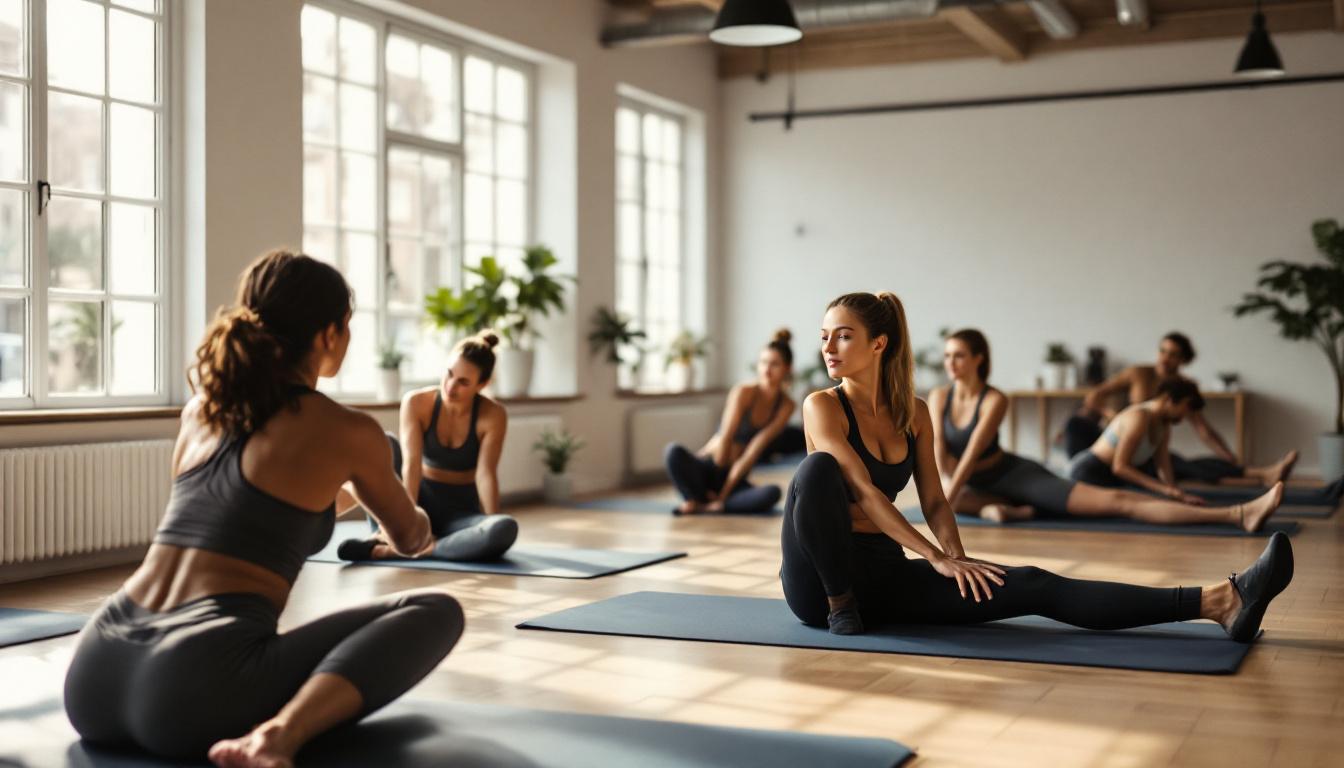

Achieving flat abs often feels like a relentless pursuit of endless crunches, yet recent guidance from top fitness coaches suggests a smarter, more effective approach. Rather than relying on sheer volume, Pilates offers targeted exercises that emphasize deep core activation, particularly the engagement of the transversus abdominis, the body’s natural corset. This Pilates move strengthens the core more efficiently than traditional crunches, accelerating ab definition while improving posture and functional strength. Here’s why shifting focus to quality Pilates ab training is reshaping how fitness enthusiasts sculpt their midsection in 2025.
Why Traditional Crunches Often Fall Short
Cruising through 100 crunches has long been a standard symbol of dedication to achieving visible abs, yet this approach may not deliver the fastest or most sustainable results. Crunches primarily target the rectus abdominis—the superficial muscles responsible for the classic “six-pack” appearance—but tend to neglect the deeper core stabilizers. This imbalance means the core’s foundational muscles remain undertrained, which can hinder postural improvements and overall abdominal tone.
Experts now emphasize that the key to flat abs and faster abs development lies in focusing on the internal muscle layers, especially the transversus abdominis. This muscle acts like an internal girdle, supporting the spine, controlling intra-abdominal pressure, and stabilizing the trunk during dynamic movements. Crunches, despite their popularity, don’t adequately activate this deep layer. Instead, excessive crunching risks overworking superficial muscles and may even contribute to lower back discomfort if done improperly.
Moreover, research has highlighted that repetitive crunching without comprehensive core engagement may limit fat loss around the midsection. Fat reduction is primarily a systemic process influenced by diet and overall activity levels, not isolated exercises. Thus, relying on high-rep crunch routines can feel frustrating, as ab visibility depends not just on muscle tone, but also on reducing the fat layer covering the muscles.
In essence, crunches are no longer considered a universal solution. As fitness trainers and health coaches discuss in 2025, the focus has shifted from quantity to precision and depth in ab training, heralding Pilates-based methods as superior alternatives.
The Pilates Move Top Coaches Recommend for Abs
Among numerous Pilates techniques, the move often referred to as the “Double Straight Leg Stretch” has garnered enthusiastic endorsements from professional trainers aiming to maximize core engagement efficiently. Unlike traditional crunches, this exercise targets the deep core muscles extensively while safeguarding the spine and promoting functional strength.
Executing this move correctly demands concentration on form, breathwork, and controlled movement, embodying Pilates’ principles of quality. Lying on the mat with legs extended upward, the practitioner lowers them slowly toward the floor while maintaining pelvic stability and pressing the lower back gently into the ground. This action increases the lever arm, intensifying activation within the transversus abdominis and lower abdominals.
Top coaches swear by this Pilates exercise because it promotes a full-body connection—engaging the entire core rather than isolating surface muscles. It also assists in aligning the trunk, which enhances posture and reduces undue strain during everyday activities and other workouts.
This move’s effectiveness arises from its deliberate, mindful execution, emphasizing engaging the internal “corset” muscle naturally. Pilates-inspired ab training like this cultivates endurance in core muscles, which translates to better support for the back and faster ab definition, propelling fitness goals beyond what typical crunch routines can achieve.
Building Core Strength Beyond The Surface
Core strength is often misunderstood as mere abdominal muscle size or aesthetic appearance. In reality, robust core strength originates from the harmony of multiple muscle layers working in tandem—deep stabilizers, obliques, and rectus abdominis all contributing to balance, movement efficiency, and injury prevention.
The Pilates move emphasized by professional trainers fosters integration across these muscle groups rather than focusing on isolated abdominals. The transversus abdominis, in particular, stabilizes the spine during motion, reducing the risk of injury and improving posture, a benefit that ripples into other sports such as CrossFit, Hyrox competitions, and running.
By prioritizing controlled engagement, Pilates exercises improve neuromuscular connection, enabling athletes to recruit the right muscles at the right moments. As a result, this not only accelerates ab definition but also enhances athletic performance by promoting optimal core function—a critical foundation for all strength and endurance activities.
Fitness tips from coaching experts underscore that training the deep core supports better movement patterns, efficiency in energy transfer, and resilience under stress. This layered approach to ab training is crucial for anyone striving to flatten their abs faster while safeguarding mobility and long-term health.
Integrating Pilates into Your Abs Workout Routine
Integrating Pilates moves into abs workouts transforms them from simply muscle-building drills into comprehensive core conditioning sessions. The key is to emphasize precision, control, and breath coordination over sheer volume, aligning with the philosophies shared by top coaches.
Practicing Pilates exercises like the Double Straight Leg Stretch, the Hundred, and the Dead Bug ensures balanced development of both deep and superficial abdominal muscles. Experts usually recommend incorporating these exercises 8 to 12 times per set, focusing deeply on breath and alignment rather than trying to reach high repetition counts.
Moreover, these moves complement other core exercises such as planks, side planks, and hanging leg raises, which collectively target the full core complex from different angles. This diversity in exercise selection encourages muscle balance, enhances fat-burning potential, and secures overall core stability.
For fitness enthusiasts involved in high-intensity training styles such as CrossFit or Hyrox, Pilates abs workouts serve as recovery and injury-prevention tools that enhance durability. The improved intra-abdominal pressure and spinal support gained through Pilates translate to better performance and reduced fatigue during demanding sessions.
The Science Behind Pilates for Faster Abs
The scientific foundation supporting Pilates as a superior method for attaining flat abs lies in its unique engagement of the transversus abdominis and emphasis on core stabilization. Clinical studies consistently point to the role of Pilates exercises in increasing abdominal muscle endurance, reducing lower back pain, and enhancing postural alignment—all factors contributing to more defined belly muscles over time.
Unlike repetitive crunch-based training, Pilates focuses on functional strength, training muscles to activate synergistically during real-life activities. This neuromuscular adaptation encourages fat mobilization around the midsection and promotes efficient energy use.
Evidence from physiological research shows that the deep core muscles play a pivotal role in maintaining intra-abdominal pressure, which supports the lumbar spine and optimizes breathing mechanics. Enhanced breath control from Pilates further assists in muscle endurance, enabling longer mantaining of muscle engagement and thus expediting ab toning.
Given these insights, Pilates moves represent more than aesthetic workouts—they function as foundational exercises for core health and longevity, increasingly recommended by fitness experts aiming for meaningful, lasting results beyond mere surface definition.
