The plan
A busy training week can make protein feel like another number to hit: a shake after class, a bigger dinner, or a guess based on what someone else eats. For women who do CrossFit or other regular exercise, the useful starting point is not a special “women’s” formula but a clear distinction between the general adult recommendation and guidance for athletes. Your body weight, training, overall food intake, and health needs all matter. Here’s how to compare the numbers, turn them into a practical estimate, and check whether your routine is working for you.
Which protein target should you use?
Start by separating two numbers that are often presented as if they mean the same thing. The Recommended Dietary Allowance, or RDA, is the general adult baseline: 0.8 grams of protein per kilogram of body weight per day. It is not the same as a sport-specific target. The NIH Office of Dietary Supplements describes a broader range for athletes of about 1.2 to 2.0 g/kg/day, while the International Society of Sports Nutrition’s 2017 position stand gives 1.4 to 2.0 g/kg/day for most exercising people. These ranges are population-level guidance, not a personalized prescription; the NIH fact sheet on exercise and athletic performance and the ISSN position stand on protein and exercise are useful references for their different scopes.
The distinction matters if you train regularly. The adult RDA is a baseline for healthy adults; an athlete range accounts for exercise-related needs. Neither source gives a single protein target that applies to every woman who lifts, does metcons, or attends CrossFit. Training volume, goals, total energy intake, food preferences, and health history affect what is practical. If you have kidney disease or another condition that affects nutrition, ask your physician or registered dietitian before increasing your intake.
How do you calculate a daily range?
Convert your body weight to kilograms, then multiply by a daily target in grams per kilogram. For example, a person weighing 150 pounds weighs about 68 kg. At the adult RDA of 0.8 g/kg, that works out to roughly 54 g per day. Using the NIH athlete range of 1.2 to 2.0 g/kg gives roughly 82 to 136 g per day. Using the ISSN range of 1.4 to 2.0 g/kg gives about 95 to 136 g per day. These are estimates from the cited ranges, not a claim that one number is right for every 150-pound athlete.
Treat the calculation as a starting point, not a scorecard. The higher end is not automatically better, and eating more protein does not replace sufficient calories, carbohydrates, fluids, sleep, or a well-planned training program. If you are dieting, under-fueling, or preparing for competition, avoid making a large change based only on an online calculation. A sports dietitian can account for your schedule and overall intake.
Which foods make the target manageable?
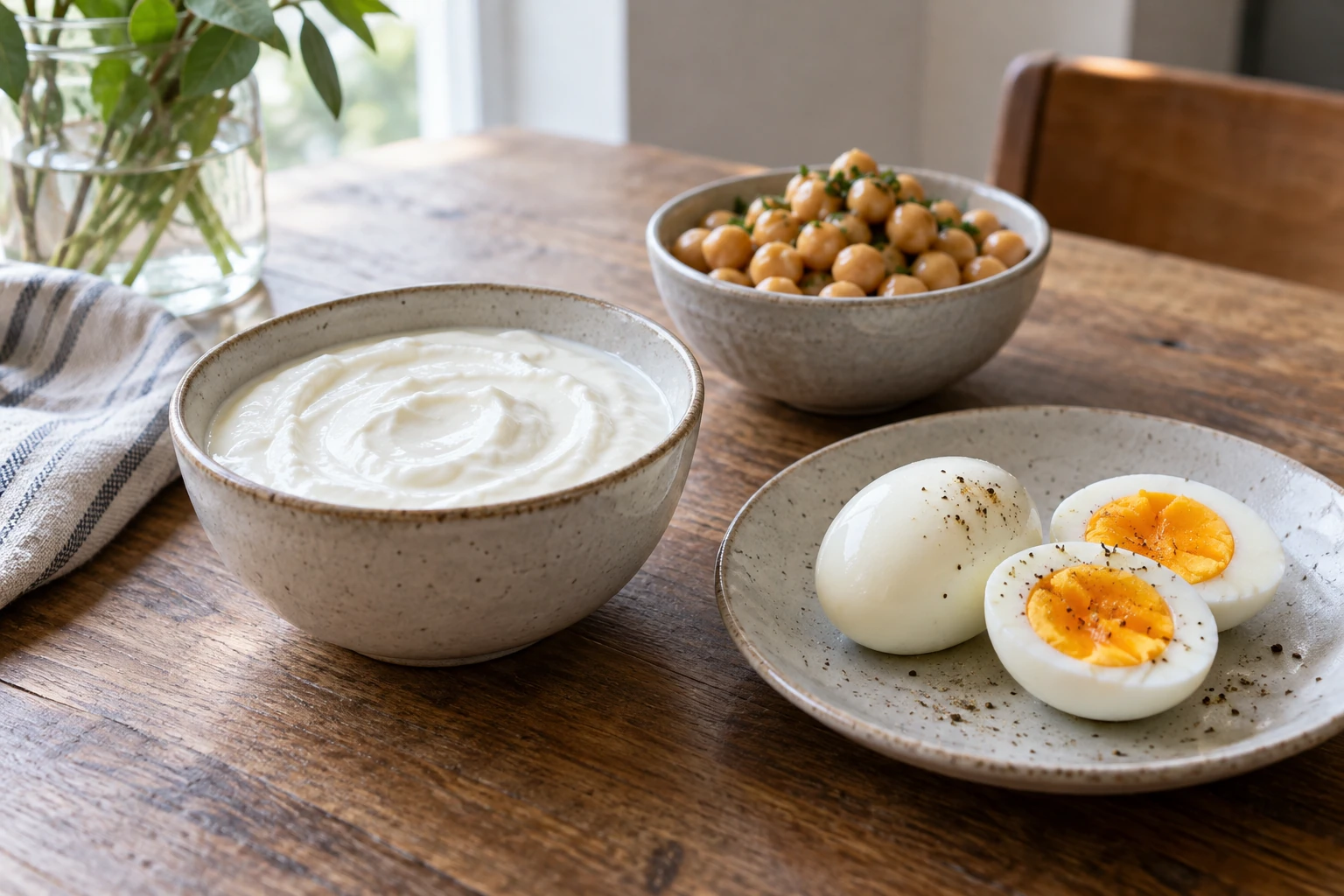
You do not need to build every meal around meat or depend on protein powder. The NIH fact sheet lists familiar examples: a 3-ounce chicken breast has about 27 g of protein, one egg about 6 g, a cup of milk about 8 g, a half-cup of black beans about 7 g, and an ounce of peanuts about 7 g. Values vary with product and preparation, so use the nutrition label when you need a closer estimate. Other practical choices include fish, yogurt, tofu, lentils, and combinations of plant foods.
Think in meals and snacks rather than trying to make up a large shortfall at night. For instance, eggs or yogurt at breakfast, beans or chicken at lunch, and tofu, fish, or another protein source at dinner can spread protein across the day. A snack can fill a gap when there are several hours between meals or training and dinner. These are flexible patterns, not required foods; choose options that suit your appetite, budget, culture, and dietary needs.
Protein quality can also be a consideration. Complete proteins contain all nine essential amino acids, which the body cannot make in sufficient amounts. Animal foods and soy are common complete-protein options; a varied mix of plant foods can also contribute the amino acids you need. The ISSN position stand notes that protein needs can be met through whole foods or supplements, and that source and total daily intake both matter. You can explore related wellness habits alongside nutrition, while keeping food choices practical for your own routine.
How should you time protein around training?
Timing can help organize your day, but it does not need to become a narrow post-workout deadline. The NIH fact sheet reports sports-nutrition guidance of about 0.3 g/kg of high-quality protein in a serving after exercise and then every 3 to 5 hours. For someone at 150 pounds, 0.3 g/kg is about 20 g per serving. The same fact sheet notes that studies have not found a clear strength or muscle-size advantage simply from consuming protein within an hour before or after exercise; the recovery period can last up to 24 hours.
In practice, have a protein-containing meal or snack when it fits your schedule, especially if your last meal was several hours earlier. After a demanding class, a normal meal with protein and carbohydrates is a reasonable option. If you train early and cannot eat much beforehand, bring something you can tolerate for afterward. Mobility and recovery habits matter too; protein does not replace a warm-up, sound technique, or a gradual increase in training load. If you’re adding movement work to your routine, spinal mobility drills are a separate training consideration, not a substitute for nutrition.
How can you check whether your plan is working?
Track your usual meals for several typical days, including training and rest days. Note approximate protein portions and look for recurring gaps: perhaps breakfast is low in protein, or your schedule leaves a long stretch between lunch and class. Compare the pattern with a reasonable target range rather than judging one day in isolation. Food labels and a simple written log can help, but precise tracking is optional if it creates stress or distracts from eating well.
Then make one manageable adjustment, such as adding yogurt, eggs, beans, tofu, or another familiar food to a meal that is consistently light on protein. Reassess after you have followed the change long enough to see whether it fits your routine. Do not use soreness, body weight, or one workout’s performance as proof that your protein intake is adequate or inadequate; many factors affect those outcomes. If eating enough feels difficult, your weight changes unexpectedly, or you have ongoing symptoms or health concerns, talk with a physician or registered dietitian. The target should support training and overall health, not turn every meal into a test.
Questions fréquentes
Do women need a protein shake after every CrossFit workout?
No. A shake is a convenient option, not a requirement. If a meal or snack with protein fits your schedule after training, it can serve the same practical purpose. Consider a powder only if it helps you meet your overall needs or is easier to manage than food. Check the label for serving size and ingredients, and ask a clinician or registered dietitian about supplements if you have medical concerns.
Can I get enough protein from plant foods?
Yes, a plant-forward diet can include protein from beans, lentils, soy foods, nuts, seeds, and grains. Include a variety of protein-containing foods across the day rather than relying on one item. Some plant proteins have different essential amino acid profiles, so combining varied sources can be useful. If you follow a restrictive diet or have trouble meeting your needs, a registered dietitian can help assess your overall intake.
Does protein have to be eaten immediately after a workout?
Not necessarily. The NIH Office of Dietary Supplements notes that research has not shown a clear advantage for protein taken within an hour before or after exercise compared with other timing, and the post-workout recovery period can extend well beyond that hour. Plan a protein-containing meal or snack that fits your day; consistency across meals is often more manageable than chasing a narrow timing window.
Should I raise my protein target during pregnancy or with kidney disease?
Do not use a general sports-nutrition range as your personal prescription in these situations. Pregnancy, breastfeeding, kidney disease, and other health conditions can change nutrition needs or require individualized advice. Ask your physician or a registered dietitian for a target that accounts for your health, medications, and training. Seek professional guidance as well if you have persistent pain, unexplained fatigue, or concerns about eating enough.