The plan
A shoe that feels planted during squats can feel stiff on a run; a soft, springy running shoe can feel unstable under a heavy bar. The right cross-training pair is a compromise, and where it lands depends on how much running, jumping, lifting, and rope work you do in a typical week. Start by deciding which part of training needs the most support, then use fit and movement tests to narrow your options.
What should one pair handle in a mixed workout?
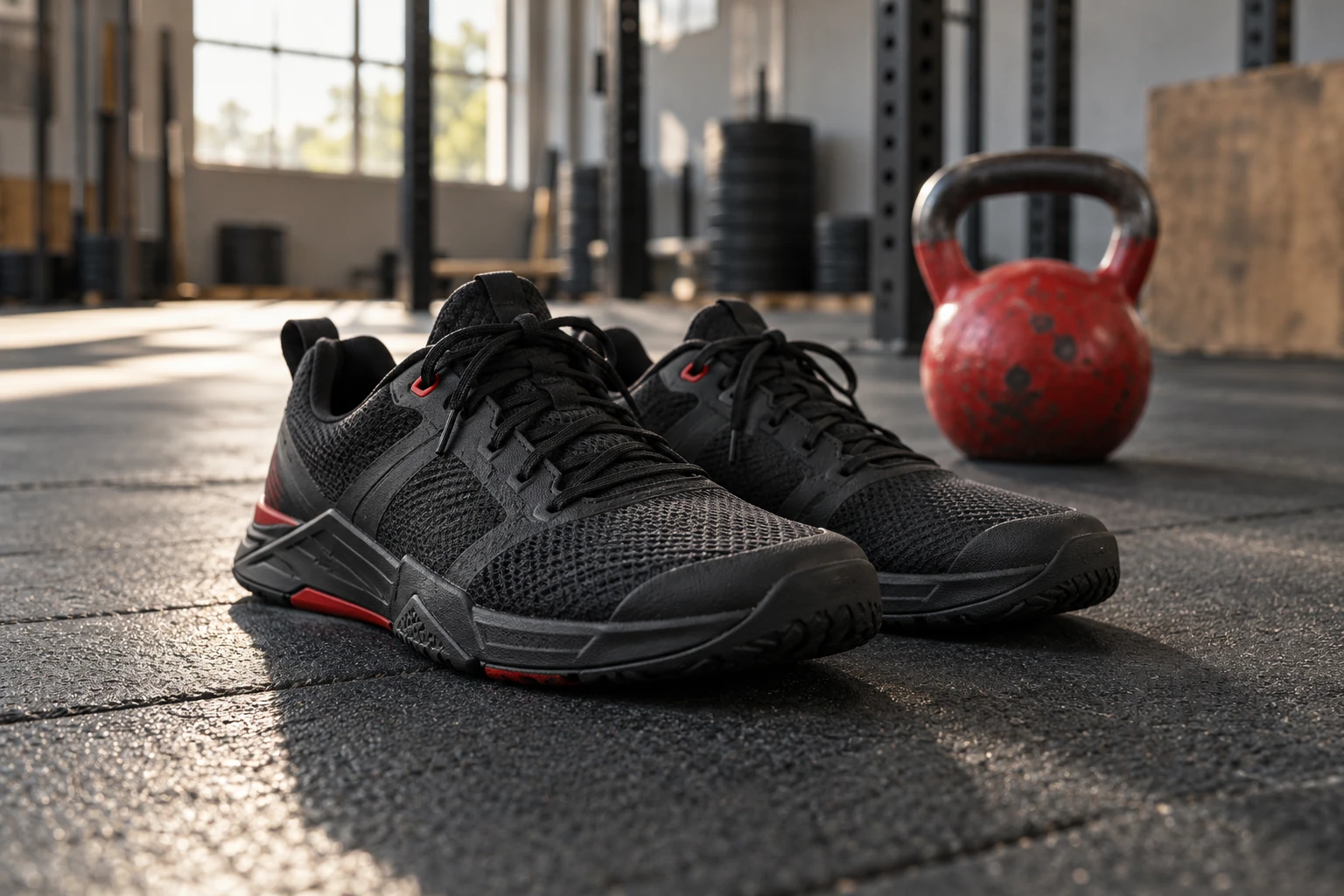
Picture a class that starts with a few runs, shifts to box jumps and burpees, then ends with squats or cleans. A running shoe may make the opening miles feel smooth, but its softer, higher midsole can compress or wobble when you brace under a bar. A stiff, low-profile lifting shoe can offer a secure platform, yet feel harsh when you sprint or jump. Cross-training shoes aim for the middle: enough cushioning and flex for short runs and dynamic drills, with a firmer, broader base for strength work.
There is no universal “best” model because workouts differ. If you mostly lift and only run short intervals, favor stability. If your sessions include repeated runs, shuttle work, or jumps, prioritize a more comfortable forefoot and a ride that lets you move naturally. And if you train for longer outdoor distances, one hybrid shoe may not be the most comfortable tool for that job.
For more general fitness context, the site’s Trends by Scarlett coverage and its discussion of standing movements for older athletes sit alongside this footwear choice, but neither changes the basic rule: choose for your actual training, not someone else’s routine.
Which features matter for running and lifting?
Start with the platform. During a squat, deadlift, or clean, you want your foot to feel supported rather than perched on a soft, shifting layer. A broad base and secure heel can help the shoe feel composed as you brace and push against the floor. For runs and jumps, look for a forefoot that bends comfortably and cushioning that does not feel like a rigid board.
Next, check the upper and outsole. The upper should hold your foot during lateral cuts without pinching your toes. Rubber that wraps the sides or reinforces high-wear areas may help with rope climbs and gym-floor abrasion; a tread pattern should grip the training surface without feeling clumsy during running. These construction details are not guarantees of performance, so check how they feel in motion.
Heel-to-toe drop is the height difference between the heel and forefoot. A lower drop often gives a closer-to-the-floor sensation, while a higher heel can feel more familiar to some runners. Neither number makes a shoe right for everyone. If you have been using a substantially different shape, transition gradually and pay attention to comfort rather than assuming the change will improve your lifts or run.
Fit is not negotiable. Your toes should have room to spread, the heel should stay put, and the midfoot should feel secure when you change direction. Try the shoes later in the day if your feet tend to swell, use the socks you train in, and test both feet. A snug, locked-in fit should not mean numbness, rubbing, or pressure across the forefoot.
How do the main shoe styles compare?
A useful comparison is by training emphasis rather than by declaring one shoe the winner. A more running-friendly trainer typically flexes more easily and feels less rigid during short efforts, but may feel less planted for heavy barbell work. A lifting-leaning cross-trainer tends to provide a firmer base and more grip, trading away some comfort for longer runs. A balanced hybrid is the sensible starting point if your week genuinely mixes both.
For example, Nike describes the Metcon 10 as a shoe for heavier lifts and high-intensity movements, with a Hyperlift plate, ReactX foam, and flex grooves. Nike lists it at $155 and says it fits small, recommending a half size up; those are manufacturer details, not proof that the shoe will fit every foot or suit every run. Its design points toward athletes who value a stable lifting platform, while the responsive foam and grooves are intended to make quicker movements less restrictive. If running is a major share of your training, try it at an easy jog before committing to it as your only pair. See Nike’s Metcon 10 specifications for the model’s stated features.
The Reebok Nano X5 is positioned as a more versatile training option. Reebok describes its Lift and Run Chassis as a feature designed to add stability for lifting and comfort for cardio transitions. That makes it worth considering if your workouts regularly alternate between strength and conditioning, but product positioning is not the same as an independent head-to-head test. A shoe’s actual feel depends on your foot shape, preferred fit, running pace, and the surface you train on. Try the flex and heel hold yourself, especially if you spend more than a few minutes running in class. Reebok’s Nano X5 details explain the manufacturer’s intended use.
For lifting-focused sessions with some conditioning, Under Armour’s UA Reign 6 offers another clear example of a low-profile design. The company lists a 2 mm offset and a weight of 13.66 oz. for the men’s model, and describes its TriBase as providing three points of ground contact. Those are model specifications, not a direct comparison with the other shoes: published shoe weight can vary by size, and the company’s product page says the shoe is designed for indoor training and is not ideal for running. That makes it a less obvious pick if your workouts include substantial mileage. Review Under Armour’s Reign 6 specifications alongside your own priorities.
These models illustrate the tradeoff, not a universal ranking. For more frequent running, lean toward the pair that lets you move smoothly and comfortably at your usual pace. For demanding barbell work, prioritize a stable heel and secure fit. If your week is evenly split, a hybrid model may be the practical one-pair answer, provided it feels acceptable in both roles.
How can you put the choice into practice?
Bring your usual training socks and try the shoes on both feet. Walk, jog briefly, and do controlled bodyweight squats, lunges, and a few lateral steps. Notice whether the heel slips, your toes feel crowded, or your foot shifts inside the shoe. If you can, test a few light lifts with the kind of stance you use in class. Keep the session easy; a quick shop-floor check cannot replicate a hard workout, but it can reveal obvious discomfort or instability.
Then compare the candidate against your current shoes using the same movements. Ask yourself three things: Does it feel stable when you brace? Can you jog and change direction without fighting the sole? Does the upper keep your foot secure without hot spots? If one shoe clearly compromises the movement you do most often, it may not be the right single-pair choice.
Be honest about your weekly schedule. A short warm-up jog is different from regular miles, and a few moderate sets are different from frequent heavy lifting. If your workouts regularly include both substantial running and heavy strength work, separate pairs may serve you better: running shoes for mileage and a stable trainer for the gym. If carrying two pairs is impractical, choose the hybrid that best supports the priority you cannot compromise on.
How do you check whether the shoe works?
Use the first few sessions as a gradual test, not as a reason to push through pain. Try the shoes in a familiar workout with manageable loads and a modest amount of running. Pay attention to heel movement, foot pressure, traction, and whether the sole feels awkward on turns or landings. A little unfamiliarity can happen when changing footwear, but persistent pain, numbness, or worsening discomfort is a reason to stop and seek guidance from a physician or physical therapist.
After a few sessions, review how the shoe performed across the movements you actually do. Did your foot stay secure under load? Did short runs feel tolerable? Did the outsole grip the floor and withstand the movements in your program? If the shoe repeatedly feels unstable during lifts or uncomfortable while running, do not let a popular name override what your own sessions are telling you. The right choice is the pair that fits your foot and supports the dominant demands of your training, with the tradeoffs understood before you buy.
Questions fréquentes
Can I use running shoes for CrossFit workouts?
You can use them for workouts built around running and lighter movements if they feel secure. For heavy lifts, lateral drills, or rope climbs, a tall, soft running midsole may feel less stable or wear faster against abrasive surfaces. If those movements are frequent, consider a training shoe or bring a separate pair for lifting.
Are cross-training shoes suitable for long-distance running?
Usually, they are a compromise rather than a dedicated distance-running choice. Cross-trainers prioritize stability, grip, and multi-directional movement, while running shoes are designed around repeated forward strides and cushioning. For a short run within a mixed workout, a flexible trainer may be enough; for regular longer mileage, use a running shoe that suits your fit and comfort.
Should I buy a separate shoe for heavy lifting?
It depends on the loads and movements in your program. A stable cross-trainer can serve for general strength work and mixed classes, but a dedicated weightlifting shoe has a raised, firm heel that some lifters prefer for specific lifts. Try your usual stance and lifting movements in the shoe before deciding whether one pair meets your needs.


