
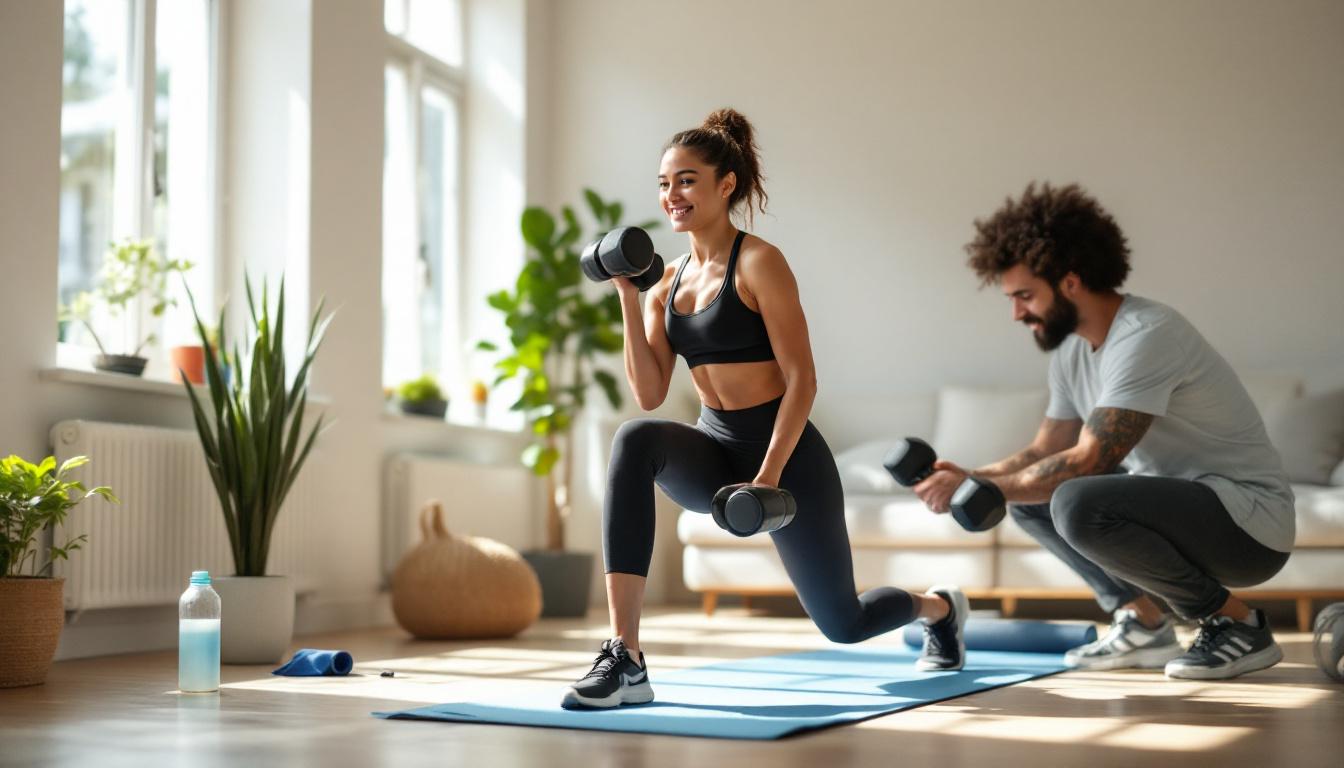

Enhancing leg strength without stepping into a gym is simpler than ever, thanks to efficient routines centered around just one piece of equipment: the dumbbell. Focusing on basic yet powerful movements, these exercises emphasize building muscle, improving stability, and increasing functional power. Not only do they target the major muscle groups in the lower body, but they also contribute to overall fitness, making them ideal for anyone aiming to maximize results from home workouts. This streamlined four-move sequence offers a practical foundation for leg day, ensuring progress while fitting seamlessly into busy lifestyles.
Effective Dumbbell Exercises for Leg Strength
Incorporating dumbbells into lower body workouts enhances resistance, activating muscles more profoundly than bodyweight exercises alone. Four simple dumbbell moves form a robust base to strengthen legs efficiently. These are the dumbbell goblet squat, Romanian deadlift, weighted step-up, and dumbbell lunge. Each targets specific leg muscles — from quads and hamstrings to glutes and calves — promoting balanced muscle building and endurance. For example, goblet squats engage the quadriceps intensely while recruiting core muscles for stability. Romanian deadlifts emphasize the hamstrings and glutes, critical for explosive strength and injury prevention. Weighted step-ups improve unilateral leg power and balance by mimicking natural movements encountered in daily activities. Dumbbell lunges combine strength and mobility, challenging the lower body’s coordination and control.
Executing these moves with moderate dumbbell weights allows effective strength training without overwhelming beginners. Progression lies in increasing repetitions or weight gradually, ensuring continued muscle adaptation. Certified trainers recommend a set range of 3–4 sets of 8–12 reps per exercise for optimal strength building, with controlled form prioritized over speed. This focus reduces injury risk and maximizes muscle recruitment. By integrating these exercises into routine leg day sessions at home, individuals can construct a strong foundation for improved mobility, power, and athleticism.
Moreover, dumbbell workouts are versatile. Incorporating pauses or slow eccentric phases during reps increases time under tension, a method scientifically proven to stimulate muscle hypertrophy. For instance, slowing descent in goblet squats forces muscles to sustain greater load longer, amplifying strength gains. Alternatively, supersets that alternate exercises without rest elevate heart rate, combining muscle building with cardiovascular benefits, ideal for holistic fitness development.
Building Lower Body Muscle with Minimal Equipment
Using only one or two dumbbells eliminates the need for gym memberships or bulky equipment setups, making muscle building accessible to more people. This simplicity aligns well with the modern trend of minimalist fitness, prioritizing functionality over fancy gear. Lower body muscles such as quadriceps, hamstrings, glutes, and calves respond well to resistance exercises, and dumbbells provide just the right challenge to stimulate hypertrophy. In fact, lower body strength is a crucial pillar for overall health, improving posture, enhancing athletic performance, and decreasing injury risk in daily life.
The dumbbell squat stands out as an all-encompassing movement targeting multiple muscle groups simultaneously. Its ability to simulate natural motions like sitting and standing makes it especially useful for functional strength. Meanwhile, the Romanian deadlift demands hip hinge proficiency—a movement often neglected in sedentary individuals—resulting in better posterior chain strength, essential for lifting tasks and spine support.
Additionally, step-ups and lunges promote unilateral work, addressing imbalances often caused by repetitive use of dominant legs. By working one leg at a time, these exercises engage smaller stabilizing muscles, which improves balance and coordination. When performed routinely, they nurture muscle symmetry, which is key for injury prevention and seamless movement.
Implementing this focused routine several times per week yields noticeable improvements in leg strength and muscle tone within weeks. For beginners, even short 20-minute sessions prove effective when consistency and progressive overload principles guide training. This approach also benefits individuals recovering from injuries or those seeking to regain baseline mobility post-inactivity.
Maximizing Home Workout Efficiency for Leg Day
One of the central challenges of home workouts is maximizing efficiency without equipment variety or trainer supervision. The 4-move dumbbell leg routine combats this by combining compound, multi-joint exercises that target all major lower body muscles. Compound movements such as squats and lunges activate numerous muscle groups at once, driving strength improvements and calorie burn in shorter time frames. This efficiency proves invaluable for busy schedules.
To further optimize home training, attention to tempo, breathing, and rest intervals is paramount. Slow and controlled movements during eccentric phases increase muscle engagement and reduce momentum reliance, key for proper strength adaptations. Coordinated breathing—exhaling during the effort phase and inhaling while returning—supports performance and endurance.
Rest periods of 30 to 60 seconds between sets enable adequate recovery while maintaining workout intensity. Employing circuit-style formats by cycling through all four exercises before resting keeps heart rate elevated, promoting cardiovascular health alongside muscle building. Additionally, alternating unilateral exercises like step-ups with bilateral ones like dumbbell squats fosters balanced fatigue management.
Incorporating minor modifications can also challenge muscles anew and prevent plateaus. Examples include adding pulses at the bottom of a squat, walking lunges instead of stationary, or elevating the rear foot during lunges to intensify glute activation. These tweaks make the 4 simple dumbbell moves versatile and adjustable for all fitness levels.
Benefits of Strength Training for Legs at Home
Strength training for the lower body offers comprehensive health advantages beyond muscle aesthetics. Increasing leg strength improves metabolic rate due to the large muscle mass involved, facilitating fat loss and body composition enhancements. This is particularly significant given rising sedentary lifestyle trends, where reduced lower body activity contributes to metabolic sluggishness and mobility loss.
Furthermore, robust legs support improved joint stability, especially in knees and hips, which are commonly affected by age and repetitive strain injuries. Dumbbell exercises like lunges and step-ups improve not only muscular strength but also neuromuscular coordination, reducing fall risk and fostering functional independence.
Engaging in regular leg-focused strength training also enhances bone density through mechanical loading, a preventive measure against osteoporosis. This effect is well documented in clinical studies and underscores the importance of resistance exercise as an accessible intervention.
Importantly, leg strength correlates with enhanced athletic performance in running, jumping, and power sports, benefiting recreational athletes and fitness enthusiasts alike. Cross-training with dumbbell exercises complements cardiovascular fitness while establishing a foundation for more advanced routines as fitness advances.
Simple Moves for Sustainable Leg Strength Progress
Consistency and simplicity pave the way for sustainable leg strength development at home. The chosen four dumbbell moves offer a straightforward blueprint that avoids overwhelming novices while delivering targeted muscle building. Setting clear weekly goals—such as increasing dumbbell weight, adding repetitions, or reducing rest times—keeps motivation high and results measurable.
Tracking progress through performance journaling or digital apps enhances awareness of improvements and helps identify areas needing adjustment. For instance, if lunges feel less challenging, upping dumbbell weight or shifting to walking lunges adds complexity.
Additionally, combining these exercises with proper nutrition, hydration, and adequate sleep optimizes recovery and muscle growth. Integrating mobility drills and stretching complements strength work, preventing muscle tightness and promoting long-term joint health.
To summarize, embracing a simple yet strategically designed dumbbell leg workout ensures effective strength training at home. In an era where accessibility and efficiency dominate fitness trends, these moves are a valuable resource for anyone aiming to build stronger legs, enhance overall fitness, and maintain an active lifestyle.
