
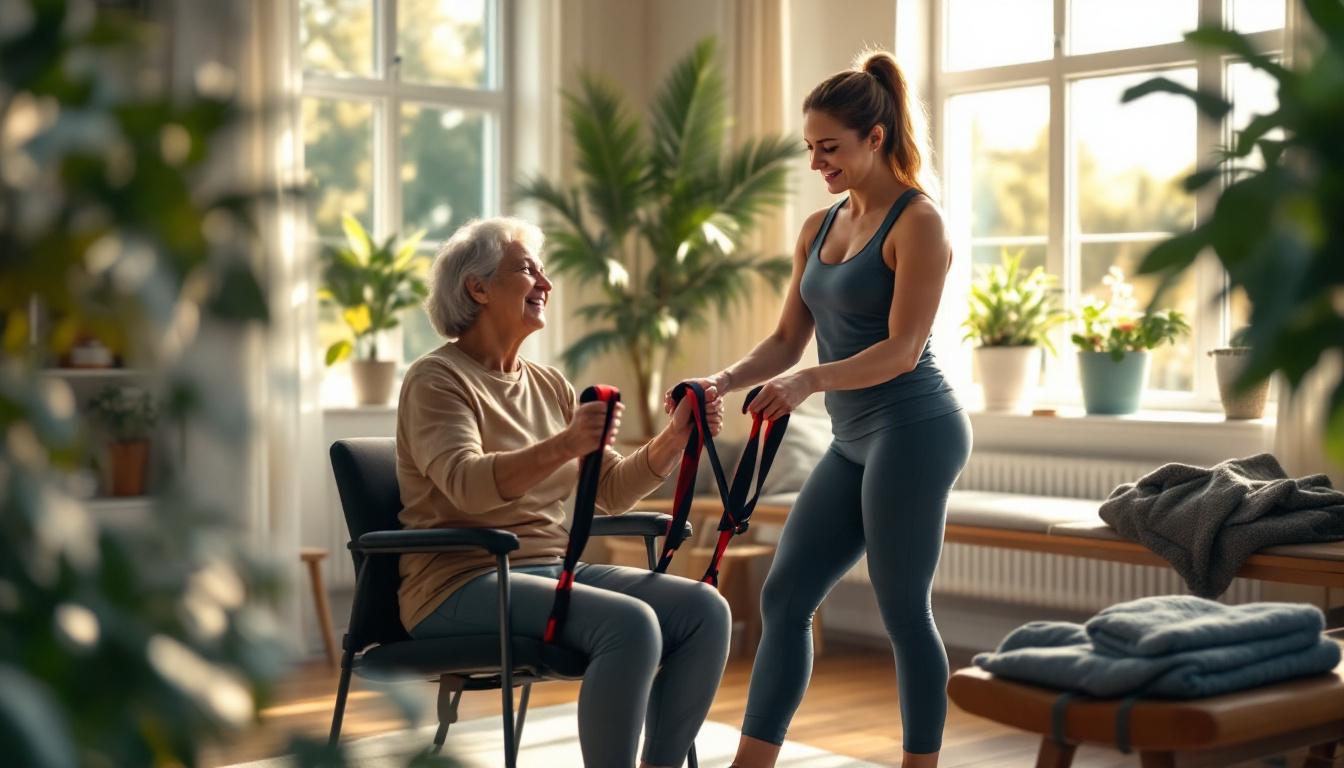

Strength and mobility often decline with age, making everyday tasks challenging for many elderly individuals. However, targeted exercise routines can counteract these effects, promoting independence and wellness. A coach dedicated to her parents’ health has developed a practical six-move routine designed specifically to enhance strength and mobility for those in their late 50s and 60s. This workout focuses on functional fitness, helping improve balance, muscle tone, and joint flexibility—key factors in maintaining a vibrant and active lifestyle as one grows older.
Essential Strength Moves for Aging Parents
As people age, preserving muscle mass and functional strength becomes critical to their overall health. This coach’s six-move routine is crafted to target major muscle groups that influence daily activities like standing, walking, lifting, and bending safely. Exercises such as the kneel-to-stand improve the ability to rise from the floor with ease—essential for fall recovery—while the squat on a balance ball strengthens the lower body and core, enhancing stability. The inclusion of balance tools, like a resistance band or balance ball, challenges proprioception and muscular coordination, reducing fall risks. This approach reflects the latest in fitness trends prioritizing functional strength over isolated muscle work.
Each move is tailored to be adaptable, allowing varying levels of intensity. For example, the coach advises starting the split squat without weights to master movements before progressing to weighted versions, ensuring safety and steady gains. The routine’s versatility means it can integrate smoothly into regular fitness schedules or stand alone as a dedicated session for older adults aiming to maintain or boost mobility.
Evidence shows strength training supports metabolic health and bone density, reducing risks of osteoporosis and diabetes, common concerns in later life. By focusing on compound exercises, this routine not only fosters muscle growth but also improves the coordination required for everyday tasks. The coach highlights this program’s potential to alleviate pain associated with mobility limitations, such as lower back discomfort, by strengthening hips and hamstrings through movements like the hamstring curl.
This routine aligns with expert recommendations to combine strength training with balance and mobility work, which are crucial for aging populations. The tailored exercises specifically address challenges like lifting objects overhead without pain, maintaining posture, and preventing instability caused by muscle imbalances—offering a holistic path to wellness that resonates with the experiences of aging parents worldwide.
Mobility-Focused Exercises Enhancing Joint Health
Maintaining joint mobility is key to independent living, especially for elderly adults facing stiffness or discomfort. The six-move routine integrates exercises specifically aimed at preserving and improving the range of motion, which tends to decline with age. For instance, the push press promotes shoulder mobility and strength, enabling better overhead movement useful for daily chores like reaching shelves or dressing. Similarly, the standing march not only builds balance but enhances hip flexor flexibility and coordination, which typically reduce as people grow older.
These mobility exercises are designed to reduce common age-related complaints such as joint pain and restricted movement. The push press, done with a pair of dumbbells or kettlebells, mirrors functional everyday actions, preparing the body for real-life tasks. Alongside strength benefits, it encourages proper shoulder mechanics, which can combat issues like frozen shoulder or impingement often encountered in retired populations.
Moreover, the coach emphasizes the importance of integrating exercises that enhance proprioception—the awareness of body positioning—which naturally diminishes with age and can increase fall risks. The split squat with twist and variations incorporating balance pads are key to this. They train the nervous system to coordinate limbs more effectively, which fosters better movement control and safety in activities such as walking on uneven ground or transitioning from sitting to standing.
By adopting these mobility-enhancing exercises, older adults can enjoy increased range of motion and reduced stiffness, leading to greater participation in social and physical activities. This approach aligns with current wellness trends that prioritize movement quality over quantity, encouraging a lifestyle that supports long-term joint health and functional freedom.
Balance and Coordination for Safer Daily Movements
Improved balance and coordination stand at the core of this coach’s training methodology, since these skills are vital for preventing falls and sustaining independence. The six-move routine addresses this through exercises like the standing march and split squat with twist, which challenge stability while engaging the core and lower body muscles cohesively. Balance training enhances neuromuscular function, which often degrades with age, increasing fall susceptibility—a major health risk among elderly populations.
Research highlights that integrating balance-focused moves in strength routines diminishes injury risks by improving postural control and muscle response times. These exercises encourage synchronization between mind and body, fostering quicker reactions and better judgment of spatial environments. In this routine, the coach carefully sequences movements to build confidence progressively, starting with supported variations and advancing as the individual’s capabilities grow.
Furthermore, unilateral exercises like the bent-over row, which works each side of the body independently, help correct asymmetries that often develop with sedentary lifestyles and previous injuries. Strengthening weaker sides supports improved movement symmetry, decreasing compensatory strain and discomfort during walking or carrying items. Such comprehensive training leads to greater functional independence and higher quality of life, allowing elderly parents to feel stable and secure in their daily routines.
Emphasizing balance complements strength and mobility, creating a foundation for whole-body fitness. The coach’s use of accessible equipment like balance balls and resistance bands invites older adults to engage in safe yet effective workouts that cultivate lasting wellness, all while addressing the unique challenges presented by aging bodies.
For those seeking more guidance on balance improvement, specialized routines like these offer expert techniques and modifications suitable for all fitness levels.
Building Core Strength for Posture and Stability
Core strength plays a pivotal role in stabilizing the body, supporting good posture, and preventing lower back pain—all concerns heightened by advancing age. This coach includes moves such as the standing march and engages the pelvic floor during bent-over row variations to develop deep core muscles. Strengthening the transverse abdominis and multifidus muscles enhances spinal support, reducing the strain placed on vertebrae and discs during movement.
Good core conditioning also underpins balance and coordination by providing a stable center from which limbs can move efficiently. This is vital as weak core muscles frequently contribute to falls and functional decline in elderly populations. Incorporating gentle yet effective core exercises, the routine helps older adults maintain an upright posture, which influences breathing, digestion, and overall vitality positively.
Additionally, the coach encourages combining core strengthening with breathing techniques to improve pelvic floor activation. Such integrated approaches strengthen the muscles supporting bladder control—a common issue faced by many seniors—and aid in alleviating back discomfort. Enhancing these key areas fosters confidence in daily activities such as lifting groceries or playing with grandchildren, directly boosting wellness and quality of life.
Understanding the connection between core health and everyday functionality reinforces the importance of targeted exercise for aging individuals. Maintaining core integrity supports longevity, helping elderly parents stay active and minimize discomfort linked to sedentary lifestyles or age-related degeneration.
How to Customize the Routine for Individual Needs
The beauty of this six-move routine lies in its adaptability for different fitness levels and physical limitations. The coach stresses starting with bodyweight versions of each exercise and then gradually incorporating equipment such as dumbbells, kettlebells, or resistance bands as strength and confidence build. This ensures safe progression and helps prevent injury. She also recommends that elderly individuals consult healthcare providers before beginning new exercise programs, especially if chronic health issues exist.
Adjusting repetitions, sets, and rest intervals allows the routine to be tailored—from rehabilitative objectives to maintenance or strength-building goals. Older adults can prioritize moves that target their specific mobility challenges, such as favoring hamstring curls to alleviate lower back pain or spending more time on balance exercises to decrease fall risk. Incorporating this routine alongside other gentle activities like Pilates can further enhance core stability and overall wellness, contributing to a holistic approach to health.
Moreover, consistency is key. Integrating these exercises into weekly schedules promotes gradual improvements that compound over time. Support from family members or coaches can motivate adherence and provide encouragement. For those interested in expanding on this routine, exploring resources on morning muscle-building workouts or gentle Pilates for core strength offers valuable additions suitable for seniors.
Ultimately, adapting this mobility and strength program to individual preferences and abilities cultivates an empowering path towards maintaining independence and wellness well into later years.
