
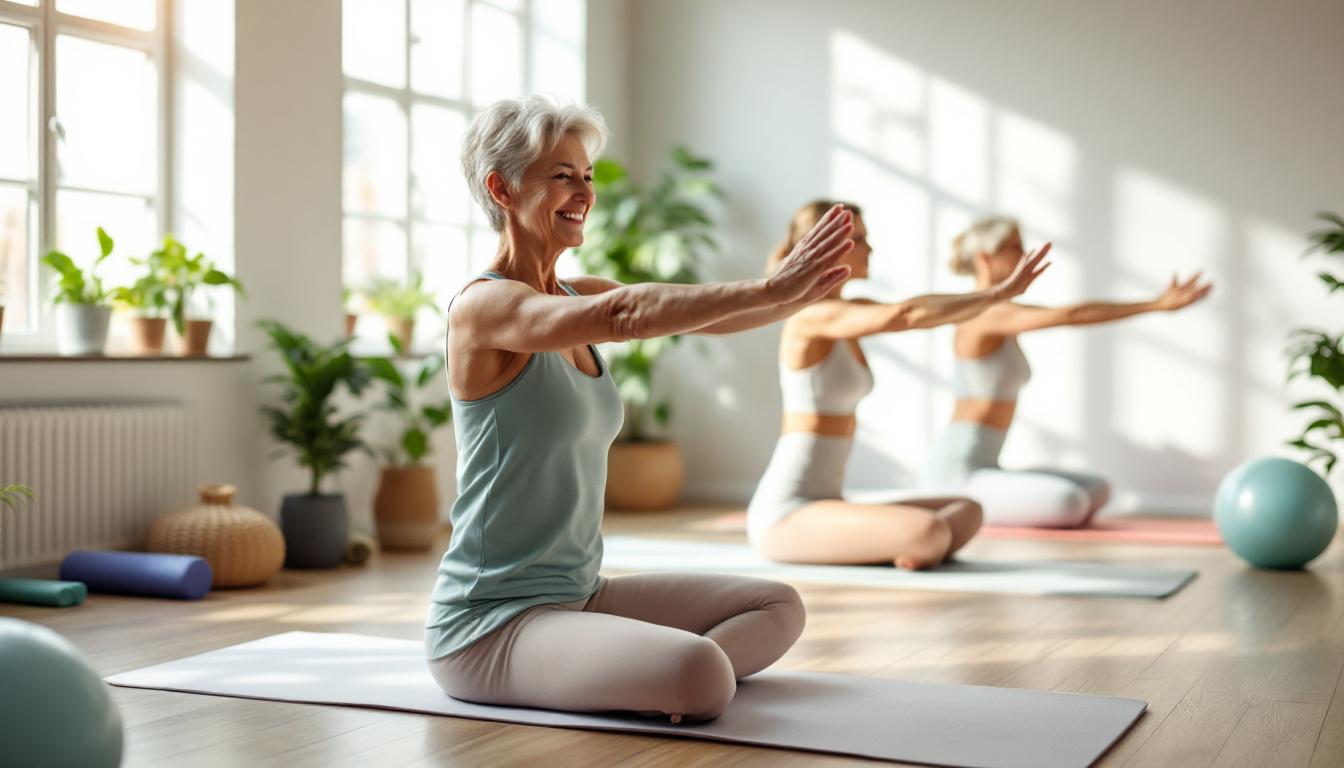

Maintaining mobility, strength, and balance becomes increasingly vital as women age beyond 60. Pilates offers a gentle yet powerful approach to enhance these key facets of health. Focused on core activation and low-impact movements, Pilates supports sustainable fitness and reduces injury risks. Experts commonly highlight specific exercises designed especially for senior fitness, which improve posture, coordination, and functional movement — essential components of healthy aging. Embracing Pilates can transform how women over 60 experience their bodies by improving flexibility and promoting confidence in daily activities.
CORE STRENGTHENING FOR SENIOR WOMEN
Core strength underpins posture, balance, and overall mobility, making it the cornerstone of Pilates for women over 60. The core, often called the “powerhouse,” includes over 30 muscles that support the spine and enable functional movement. Prioritizing core workouts prevents falls, reduces back pain, and fosters independence. For example, a classic exercise such as the Plank recruits multiple major muscle groups, providing a comprehensive challenge. Modifications like forearm support or knee placement allow beginners to build strength safely. Pilates moves for flat abs also target this area effectively. A suggested routine involves holding planks for 30 seconds, repeating 2 to 3 times, progressively extending the duration to one minute as strength increases. Key principles include aligning the spine, engaging the upper back to create space between shoulder blades, and maintaining a straight body line from head to heels. These techniques help prevent slouching—a common postural concern in later years—and preserve spinal integrity.
- Enhances posture stability and spinal support
- Reduces risk of falls by improving balance
- Promotes healthy back and abdominal muscles
- Offers scalable difficulty via modifications
Moreover, strengthening the core enhances coordination and body awareness, crucial for safe daily movement and fall prevention. This targeted work addresses muscle loss accelerated by aging. A Pilates program focusing on core muscles can counteract these effects effectively.
ENHANCED MOBILITY AND FLEXIBILITY THROUGH PILATES
Maintaining mobility is fundamental for daily independence and quality of life in seniors. Pilates emphasizes dual development of strength and flexibility, thereby reducing joint stiffness and increasing range of motion. Exercises such as the Bow and Arrow promote spinal rotation, challenge obliques, and engage deep abdominal muscles. Strengthening key areas with Pilates can help mitigate osteopenia and osteoporosis risks by incorporating gentle weight-bearing resistance via equipment or spring mechanisms. This combination slows bone density loss common with age. Starting seated on the floor or chair with knees bent, this exercise involves controlled leaning and twisting motions to maintain spinal health.
- Improves joint range and muscle elasticity
- Supports bone health through resistance elements
- Encourages smooth, functional movements necessary for daily tasks
- Minimizes stiffness and discomfort linked to aging
Regular practice of such Pilates exercises boosts balance by engaging hips, feet, and ankle muscles, critical for walking stability. With an increase in flexibility, seniors experience fewer mobility limitations and enhanced confidence in movement.
BALANCE IMPROVEMENT AND FALL PREVENTION
Good balance is a vital component of senior fitness, significantly lowering fall risks. Pilates addresses this by strengthening stabilizing muscles around the trunk and lower limbs. One particularly effective exercise is the Bird Dog, which requires coordination of opposite arm and leg extensions while maintaining core engagement and spinal neutrality. Strength exercises important for aging recommend simplified modifications, such as lowering to forearms or light resistance additions for further challenge. Execution begins on hands and knees with precise control to avoid sagging of the lower back or knee instability.
- Enhances neuromuscular coordination and proprioception
- Strengthens hip and pelvic muscles to stabilize gait
- Reduces chances of debilitating falls and fractures
- Can be adapted for individual fitness levels
Improved balance through Pilates directly supports independence by empowering women over 60 to move confidently. Studies highlight increased balance capabilities translating to safer daily activities and fewer hospital visits due to injuries from falls.
PILATES AS A LOW IMPACT WORKOUT FOR HEALTHY AGING
Pilates stands out as a preferred fitness method due to its low impact nature and adaptability to different ability levels. It offers a balanced approach that nurtures both muscular strength and cardiovascular health without excessive strain on joints. This makes it well-suited for women over 60 who desire safe exercise alternatives that still provide measurable results.
- Gentle on joints while promoting muscular endurance
- Enhances breath control and mental focus through mindful movement
- Encourages consistent fitness routine via scalable exercises
- Integrates well with other senior-friendly physical activities
The mind-body connection inherent to Pilates brings additional benefits in stress reduction and emotional well-being. Breath-linked movements enhance mindfulness, calming the nervous system and improving overall life quality. Women who engage regularly often report reduced back discomfort and improvements in their overall posture and vitality. Integrating Pilates with other healthy lifestyle practices, such as nutrition and functional strength training, forms a holistic strategy for aging well.
IMPLEMENTING PILATES INTO DAILY ROUTINES
Successful Pilates practice for women over 60 depends on consistency and adapting exercises to individual needs and limitations. Starting with beginner-friendly modifications ensures safety and builds confidence gradually. Key recommendations for incorporating Pilates include:
- Scheduling sessions 2-3 times weekly for optimal benefits
- Emphasizing form and alignment over speed or intensity
- Combining Pilates with other forms of fitness, such as light strength training or walking
- Using equipment like Pilates balls or reformers to add variety
- Consulting professionals for personalized guidance and progression
For many, these steps transform Pilates from a mere exercise regimen into a sustainable lifestyle habit that positively impacts mobility, flexibility, balance, and overall quality of life. As strength and control grow, women can extend hold times for static exercises and explore more challenging moves tailored to their evolving capability. Pilates exercises focusing on core strength are particularly recommended as foundational practice.
